
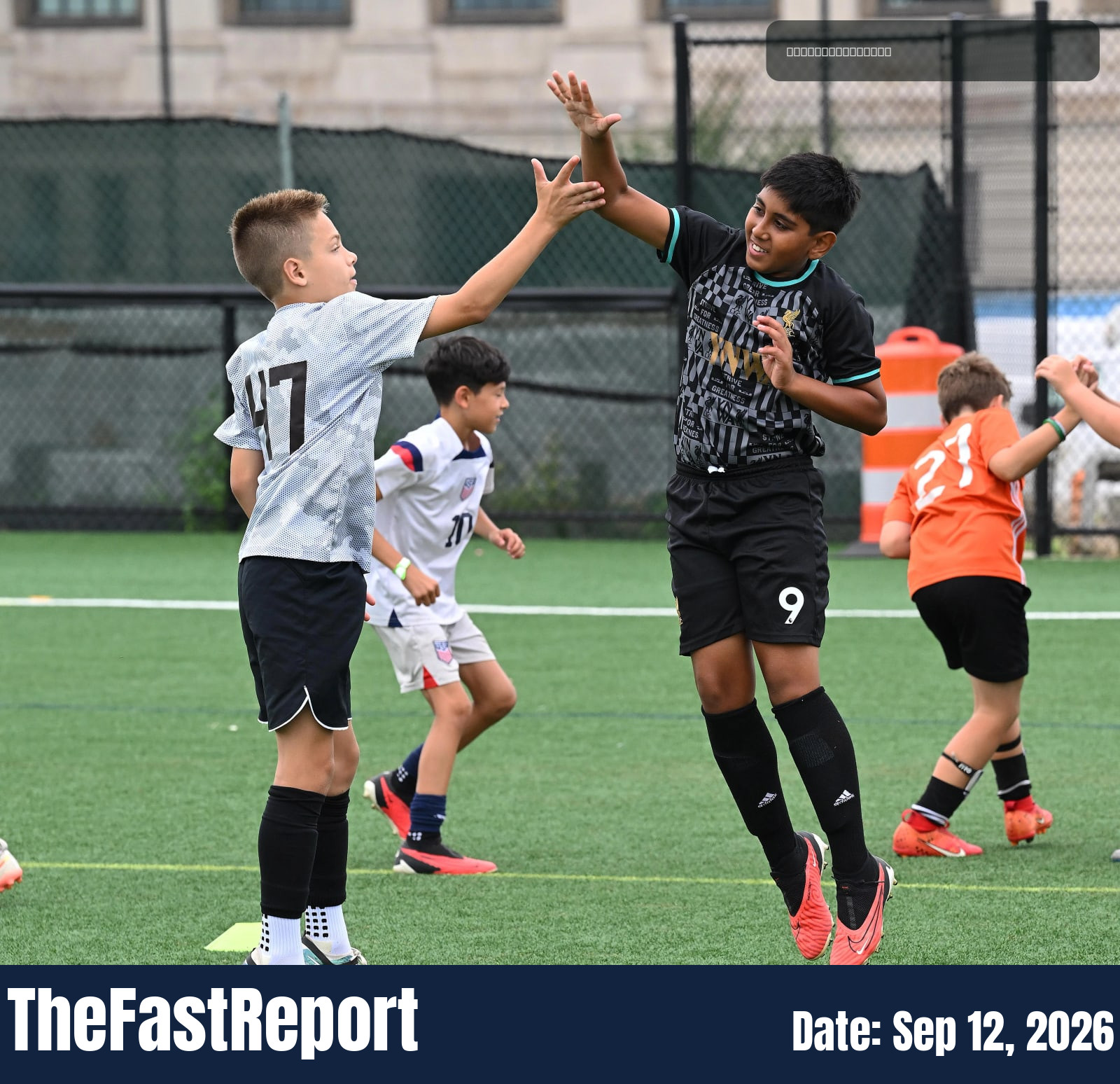

Over the last decade, the cost of youth sports has surged. Lower-cost, local recreation leagues have been undercut by premium travel programs backed by private equity, a shift that accelerated during the Covid-19 pandemic. As a result, some families are now paying thousands of dollars to keep their child in a sport they love.
Caitlin Moscatello wrote about this trend last month for New York magazine. She traces the change to the pandemic era, when park-and-rec budgets were slashed and premium leagues became the dominant option. Private investors saw an opening and moved in, producing what many parents now experience as a pay-to-play model.
That model has pushed elementary-aged children into a professionalized environment before they may be ready. Reports indicate rising rates of overuse injuries and children becoming locked into a single sport before they’ve had a chance to decide if they truly enjoy it.
Moscatello appeared on Today, Explained with co-host Noel King to discuss how youth sports changed, the effects on children, and whether the trend can be reversed.
Below is an edited excerpt of their conversation for length and clarity. The full episode is available on Today, Explained via Apple Podcasts, Pandora, and Spotify.
Private money in youth sports doesn’t seem to make a ton of sense. Who’s going to make money off of an 8-year-old playing soccer? And yet what you found is there’s a lot going on here. Give me a broad sense of what’s been happening.
About a decade ago you began to see large sums of investor capital enter the youth-sports sector. Around the pandemic and afterward, investors used a roll-up strategy: acquiring or taking financial stakes in multiple touchpoints families interact with in a child’s sport.
That can mean owning a stake in the league itself, the apparel supplier families must use for uniforms, the scheduling or statistics app parents must visit, and even preferred hotel partnerships that funnel travel bookings. On the media side, parents have described being prohibited from recording games and then being offered photo and video packages for purchase—another revenue stream.
How much are parents spending on sports?
But ultimately, in their quest to do something good for their kids, the way that the sports ecosystem has changed and is continuing to change can potentially set them up for long-term harm.
The average family spend is a little over $1,000 a year, but families involved in travel private-club programs can pay substantially more—anywhere from $3,000 a season, to $5,000 or $10,000 a season depending on sport, location, and level. Moscatello spoke with several families reporting $25,000 a year in costs.
One single mother told Moscatello she pet-sat in addition to holding a full-time job to help pay for her son’s $25,000-a-year hockey program. Moscatello also encountered numerous GoFundMes from families trying to cover fees for children as young as 6, 7, or 8 who made travel teams.
And for your $25,000 or more a year, what are you getting?
The picture is complicated. In many areas families feel they have little choice: recreation programs are limited and often end earlier than they used to.
Moscatello notes that in the 1990s it was common to play rec sports through eighth grade and then, if desired, play in high school. Now rec programs sometimes end by third or fourth grade, and private leagues are incentivized to recruit children younger and younger. Tryouts and travel teams appear for kindergarteners, first-graders, and second-graders.
Parents frequently described a fear of missing out: “This isn’t something I would necessarily choose for my kid, but if we don’t get in on the ground floor, the elevator’s going to go up without us and we’re never going to catch up and my kid won’t be able to play and everyone around me seems to be doing this now, so we’re going to do it too.”
That early recruitment dilutes rec programs in two ways: the level of play declines when many kids leave by third grade, and there simply aren’t as many children participating locally. Parents and kids also compare themselves to those in private leagues—many notice the shiny helmets, fancy uniforms, and professional coaches across the field.
What did you find all of this money in youth sports is doing to the youths playing the sports?
While the benefits of sports—higher academic achievement, better self-esteem, improved long-term health—are well documented, the changing sports ecosystem can cause harm even when parents mean well. Moscatello described psychological effects such as stress, anxiety, and burnout, alongside physical harm.
There has been a surge in overuse injuries among young athletes, driven in part by private programs that incentivize year-round play. Children are increasingly competing in hyper-competitive, year-round schedules: tournaments on weekends, six games, and practices three or four times a week. Medical guidance recommends children play multiple sports to develop varied skills and avoid repetitive-motion injuries, not play a single sport 10 to 12 months a year.
Is there any movement among parents to stop this, to say, “This has gone too far, let’s not do it anymore?”
Moscatello framed the problem as a collective-action issue: if more parents remained in rec programs, those programs would be stronger—more kids would play, making recreation more accessible, affordable, local, and fun.
She acknowledged that things can’t simply revert to the 1990s, but pointed to a model that demonstrates a path forward. Minnesota Ice Hockey is a nonprofit youth program centered on about 250 public rinks. Costs run roughly $200 to $400 to play, coaches are volunteers trained through USA Hockey, and children play in a community-focused rec model.
That program has shown results: roughly 60,000 kids play Minnesota ice hockey, and the state produces more Division I men’s and women’s ice hockey players than any other state. The model’s accessibility makes participation broadly meritocratic—everyone gets to play and enjoy the sport, while the most talented players still emerge to compete at higher levels.
Source: Vox