

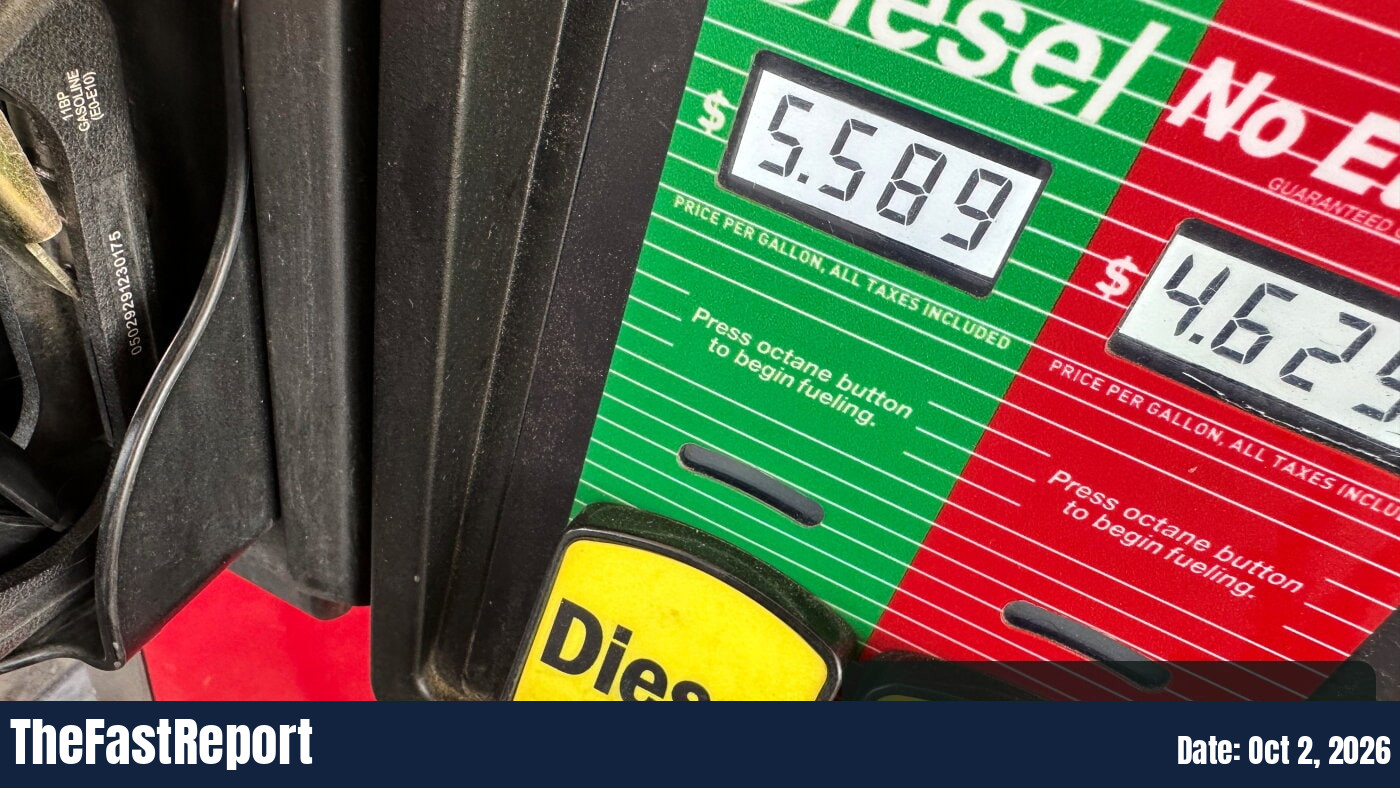
When you pull up to the gas station, diesel is frequently the pricier option compared to regular unleaded or premium gasoline. However, can you remember a time when diesel was actually less expensive? Right now, soaring diesel prices represent a significant aberration, with a national average hitting $6.38 compared to $3.60 the previous year. The situation has become severe enough that Republican members of Congress have lobbied President Trump to ban diesel exports to lower domestic costs, a measure the administration is reportedly weighing despite fierce opposition from the American Petroleum Institute.
Historically, diesel fuel costs just under $2 more than regular gasoline per gallon today, but it used to cost less than regular-grade fuel. The permanent switch occurred back in September 2004. According to the Energy Information Administration, three primary factors drove this transition. Demand served as the initial catalyst in the early 2000s, when countries like China and India rapidly motorized, industrialized, and ramped up agriculture alongside major construction and infrastructure projects, all powered by diesel. Simultaneously, diesel grew rapidly in Europe, surging from 13.8 percent of new car registrations in 1990 to 53 percent in 2007.
Nowadays, however, price spikes on diesel stem less from surging global demand and more from supply constraints. Reduced refining capacity and lower crude production resulting from the wars in Iran and Ukraine have severely limited supply, even though essential needs for diesel fuel remain high across trucks, trains, generator farms, and heating systems.
Air quality standards also played a notable role. In June 2006, federal regulations took effect to reduce the maximum amount of sulfur permitted in diesel fuel to curb air pollution. Producing this ultra-low sulfur diesel inherently costs more due to elevated refining and distribution expenses. Additionally, federal tax structures created a lasting price gap. In 1993, the federal excise tax increased to 24.4 cents per gallon for on-highway diesel, which is 6 cents higher than the equivalent tax applied to standard gasoline.
Source: npr.org