
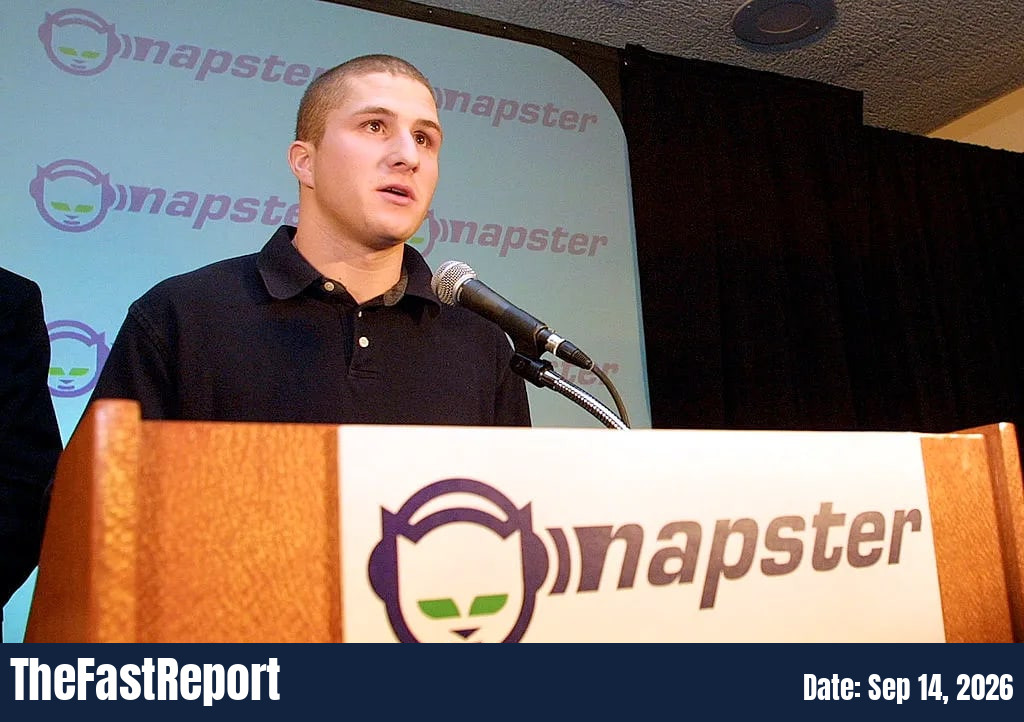
Twenty-five years ago a technological shock—Napster—upended music distribution by letting anyone share digital song files. Artists such as Metallica and Dr. Dre, backed by their record labels, fought back and drove Napster out of business. Still, the technology couldn’t be unmade. Today a similar dynamic is unfolding in brokerages as blockchain enables more firms to tokenize stocks.
Tokenized stocks have been developing for some time, but the controversy drew headlines last week after AMC’s CEO publicly accused Robinhood of “contemptible, outrageous, disgusting, detestable, inexcusable, vile” behavior for putting AMC shares on-chain without permission. Robinhood’s CEO retorted that, just because a company issues a stock, it can’t totally limit what those who buy it can do.
Robinhood’s approach is straightforward: the firm buys batches of stock, creates a tokenized version of each share, and offers contracts that give customers a financial claim on those tokens. Legally elegant, the model also opens new possibilities.
One clear benefit is broader, cheaper access to U.S. equities. While Americans can buy most stocks for minimal fees, investors in places like Brazil or South Africa face high commissions and limited availability. For those overseas buyers, acquiring shares today can feel like buying music before Napster—so it’s no surprise tokenized stocks are gaining traction in these markets.
Still, the move raises real concerns. Traditional shares carry rights—most notably voting rights—that Robinhood’s tokenized versions do not. There’s also the crucial question of who actually holds the securities that are meant to back each blockchain token.
In the cases of firms such as Robinhood and Coinbase, they work with a FINRA-registered intermediary called Alpaca that handles the record-keeping. It’s highly unlikely these firms would risk their reputations and face large regulatory fines simply to profiteer by rug-pulling overseas buyers of AMC stock.
At the same time, a fly-by-night operator could offer AMC or Apple “tokens” backed by nothing, triggering panic and a broader sell-off in the company’s shares.
The right response is not to halt tokenized stocks but to build a legal framework that allows responsible actors to operate. That mirrors what happened after Napster: a bruising legal fight eventually gave way to platforms such as Spotify and Apple Music that let consumers access content while ensuring creators are paid.
The battle over digital music was bitter, but tokenized stocks face fewer comparable issues—copyright conflict isn’t at the center here. The push for tokenization also has high-profile support: Nasdaq recently invested $100 million in Payward, a blockchain-native financial firm. On the regulatory side, the SEC is already working on an innovation exemption for some forms of on-chain stock.
Operational questions remain, including whether the indirect “wrapper” model used by Robinhood is preferable to the direct-on-blockchain issuance favored by newer firms such as Securitize and SuperState. Regardless, stocks on the blockchain appear to be arriving faster than many expect. As the music industry learned, threats and litigation are unlikely to stop a new technology for long.
Jeff John Roberts
jeff.roberts@fortune.com
@jeffjohnroberts
One more thing: OpenAI CEO Sam Altman sat down with Fortune’s Editor-in-Chief Alyson Shontell in San Francisco on Friday. In their conversation for the Fortune 500: Titans and Disruptors of Industry podcast, Altman said he believes that safety standards are “not at a place” to push AI capabilities much further right now, and that no gamble with the fate of humanity is OK for the sake of his company’s or its investors’ financial gain. He also shared that, given the current concerns, OpenAI won’t go public before 2027. Watch the full interview here.
This story was originally featured on Fortune.com.
Source: fortune.com