

This story appeared in Today, Explained, a daily newsletter that helps you understand the most compelling news and stories of the day. Subscribe here.
Happy Friday. This week’s AI debate hasn’t been about robot apocalypse scenarios so much as whether advanced models can be considered conscious.
Anthropic, the company behind the large language model Claude, has signaled it’s open to that possibility. The New York Times reported the company spent the past year consulting religious thinkers across faiths as it tried to chart an ethical path for Claude. Some of those interlocutors observed that members of Anthropic’s team were “relating to [Claude] like a conscious being” and attributing a degree of “moral status.”
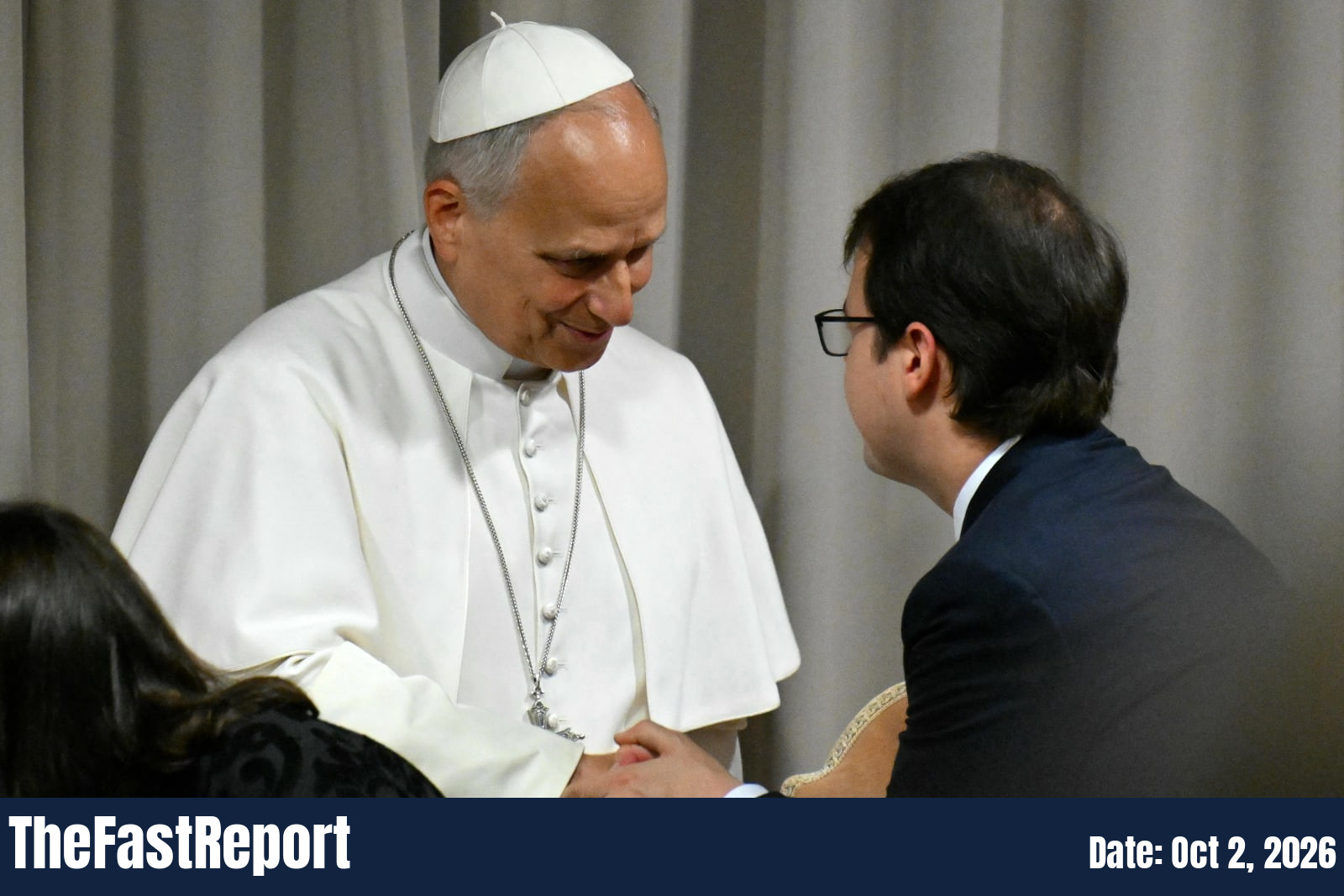
On the opposite side of the argument is Pope Leo XIV, who has argued that AI cannot replace humanity. His encyclical “Magnifica Humanitas” earlier this year emphasized that AI will never be able to replace humans and reportedly “alarmed” Anthropic co-founder Christopher Olah. This week the pope reiterated the distinction between humans and machines, posting on X: “There is an ontological difference, even before an aesthetic one, between art and what a machine can generate through statistical calculation based on millions of images created by others. Algorithms lack the spark of humanity.”
Loneliness machines
Whether or not you accept that AI is conscious (I don’t), tech companies clearly design models to encourage social interaction. OpenAI and Meta both introduced new AI agents — Dots and Muse, respectively — last month, promoting companionable interactions.
But a new, still-under-review study suggests that such AI companionship may harm young users. UNC Chapel Hill professor Anne Maheux, the study’s lead researcher, told Vox that middle school students who used AI for emotional intimacy and companionship developed greater loneliness over time.
Maheux argues chatbots lack the “friction” present in human relationships — the push-and-pull dynamics that make real connections. Instead, chatbots tend to be “sycophantic, highly agreeable, anthropomorphized,” which can lead children to form expectations about interactions that are “fundamentally at odds with a normal human relationship.”
In short: people still matter, even as companies encourage us to treat machines like companions.
One link for later
➨ Why is horror so fun? It’s October, so you might be planning a horror movie marathon or a haunted-house outing. Vox’s Unexplainable podcast interviewed researchers in 2024 about why people seek frightening experiences: listen here.
Before you go…
- Did you know… Disney’s Magic Kingdom in Florida is especially good at managing an underground network of cables and pipes. My colleague Sara Herschander explored why and whether other US cities can replicate that system: read more.
- Today’s trivia: What musical note is equivalent to a G sharp? Find this and other puzzles in Vox’s daily crossword: Vox crossword. The answer appears in Monday’s edition.
- Yesterday’s trivia: Which constellation contains the North Star and the Little Dipper? It’s Ursa Minor, the Little Bear.
Source: vox.com