
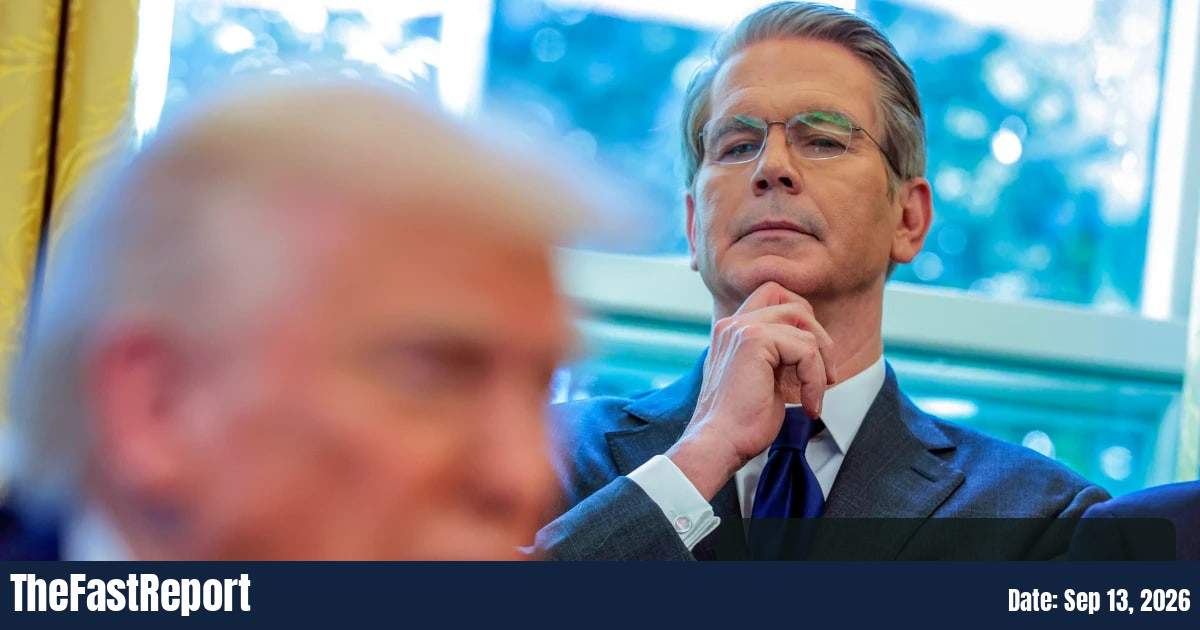
Treasury Secretary Scott Bessent appears to be losing a high-stakes tug-of-war with bond traders after challenging financial markets to bet against him. In an effort to lower longer-term interest rates and reduce borrowing costs for the U.S. government amid a national debt surpassing $40 trillion, Bessent deployed an old playbook to influence the $30 trillion U.S. debt market. Last month, the administration announced plans to at least double government debt repurchases to stimulate demand and lower yields. Bessent adopted a defiant stance at a Texas event on September 8, telling the market that he possessed asymmetric information and that anyone could bet against him if they desired. However, market participants quickly took the opposite side of the administration’s trade, extending a sell-off in U.S. Treasurys and driving interest rates to multiyear highs. Just a day after the Treasury Department announced $6 billion in longer-dated bond buybacks, 10-year yields climbed to 4.85% and subsequently surged to 4.95% by Thursday. This marked the highest rate since November 2023 and represented a roughly 0.30-point increase since the repurchase announcements began in August. Bond strategist Guy LeBas noted that the scale of the buybacks remains insufficient to impact interest rates, pointing out that the $6 billion buyback coincided with the issuance of $39 billion in 10-year notes alone. Wall Street analysts have described Bessent’s intervention as an unusual, activist strategy not seen since World War II, when the Federal Reserve and the Treasury cooperated to peg interest rates lower for wartime deficits. Some experts suggest the administration’s aggressive maneuvers may have triggered a Streisand effect, unintentionally signaling fear over its inability to control rates and incentivizing traders to test official resolve. Billionaire investor Stanley Druckenmiller observed that once markets believe the Treasury is defending a specific price, every yield increase becomes a test of official resolve. Meanwhile, broader economic conditions, including rising oil prices following the U.S. conflict with Iran and inflation concerns, have continued to drive yields higher ahead of a Federal Reserve meeting. Because longer-dated yields are largely market-driven, speculators dictating future economic conditions hold immense sway over federal borrowing costs and consumer-facing expenses like mortgages and credit cards. As yields climb higher, analysts warn that the Treasury Department may be exhausting its available tools to curb the sell-off.
Source: nbcnews.com