


This story was originally published by Grist and is reproduced here as part of the Climate Desk collaboration.
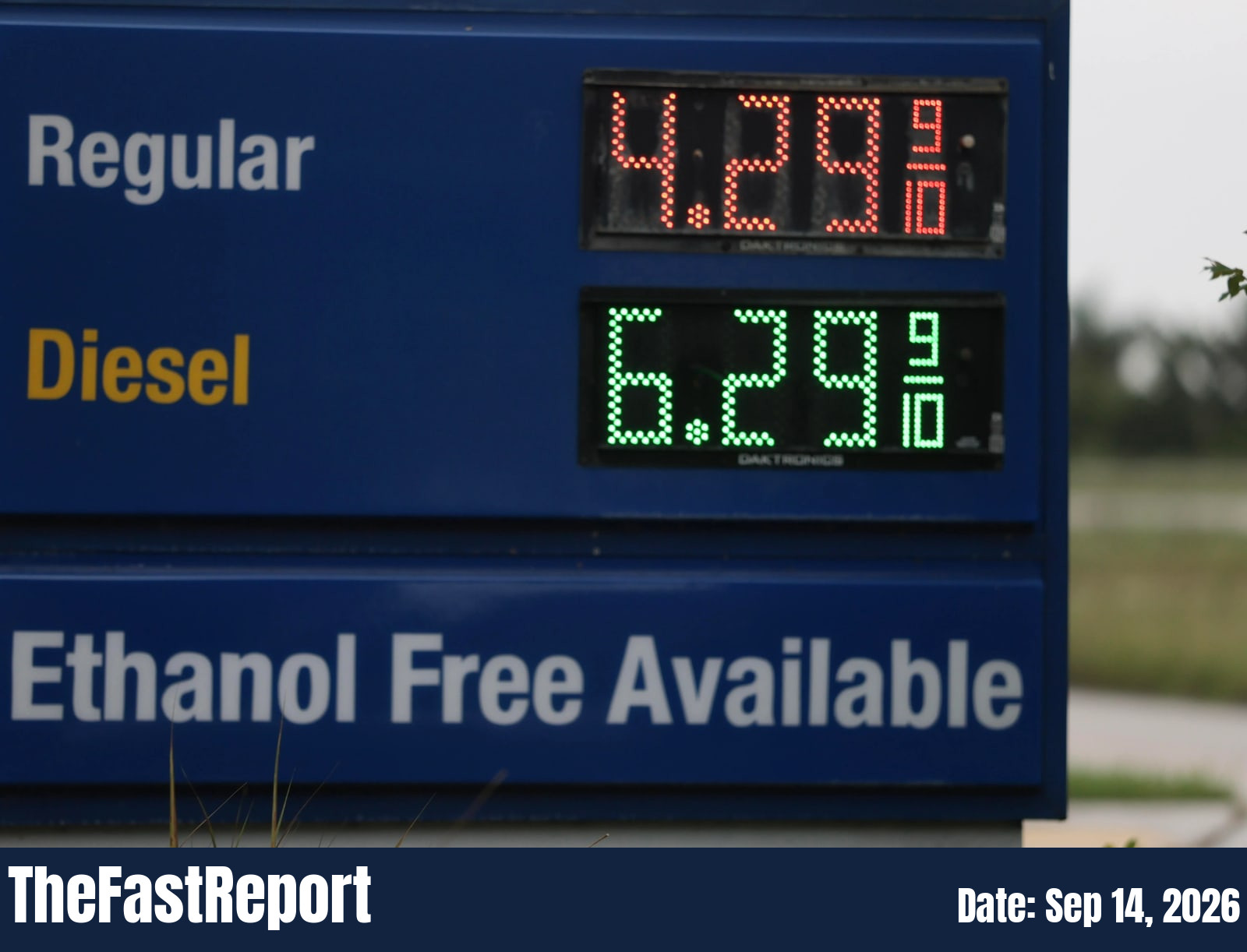
Diesel prices hit an all-time high last week — then another, and another.
According to AAA, the average price of diesel as of September 10 stands at a staggering $5.98 — about $2.31 more than in late February, when the United States and Israel launched a war against Iran. The jump has been even higher in some states, such as California, where a gallon of diesel currently costs $7.91.
Most Americans don’t buy diesel fuel directly, but they pay for it indirectly in many ways. Diesel powers the trucks and ships that move everything from milk to lumber, and those transportation costs are embedded in the prices consumers see at stores. The last time diesel climbed to similar heights was in 2022, when Russia invaded Ukraine and prices hit $5.82 per gallon.
This year, the Iran war has largely closed the Strait of Hormuz, through which 10 percent of seaborne diesel once traveled. That disruption has sent prices soaring, and consumers are increasingly feeling the impact.
“Early on, much of the cost increase gets absorbed along the supply chain through existing freight contracts and retailer margins,” David Ortega, a professor of food economics and policy at Michigan State University, told the Associated Press. “But as contracts reprice and fuel surcharges take hold, more of that cost makes its way to the grocery store.”
All told, the rising price of diesel has cost US consumers an additional $46 billion, or about $350 per household, according to a Brown University tracker. That’s slightly less than the impact of rising gasoline prices — at $55 billion — but the 61 percent jump in diesel prices has outpaced the 41 percent increase in gas.
“Diesel right now is caught up in more of a geopolitical turmoil than gasoline,” said Patrick De Haan, head of petroleum analysis for GasBuddy. In addition to the Iran war, Ukraine’s increasingly successful attacks on Russian oil refineries have also applied upward pressure.
“Russia is no longer supplying the global market,” De Haan said, and US refineries are already at full capacity, giving them little ability to pick up the slack. Domestic inventories are at their lowest level since 1982, according to data from the Energy Information Administration.
“We’re entering a key period for diesel consumption with the lowest inventories on record for early September,” David Russell, global head of market strategy at the brokerage service TradeStation, told Reuters. “Farmers and truckers typically use more diesel in the autumn, which raises the stakes for the current crisis and increases the risk of sharper price increases.”
Winter is likely to bring more problems. Because heating oil is essentially diesel, the millions of US households that still rely on it can expect unprecedented bills. That threat comes as the Trump administration has threatened to eliminate the Low Income Home Energy Assistance Program, which helps households afford their fuel bills.
“If you’re in the Northeast, then this is much more burdensome than anywhere else in the country,” Mark Wolfe, executive director of the National Energy Assistance Directors Association, told Axios. “Families are getting hit by both gasoline and heating oil.”
These surging costs are hitting consumers just before the midterm elections, when the economy is at the front of voters’ minds. Normally, fuel prices are a somewhat downstream factor in the voting calculus, but Kevin Book, head of research at energy consulting firm ClearView Energy Partners, told Axios that this year could be different. “In cold weather states — particularly those that rely on fuels other than natural gas,” he said, “it could be a very big deal.”
Even if the wars in Iran and Ukraine were to end tomorrow, it would take weeks or months for fuel prices to come down and diesel supply to recover.
“After both of those are solved, then once the flow normalizes, that will start to help global inventories recover,” De Haan said. “Only after inventories have recovered do diesel prices really see a full decline.”
By Tik Root (Vox)
Source: vox.com