
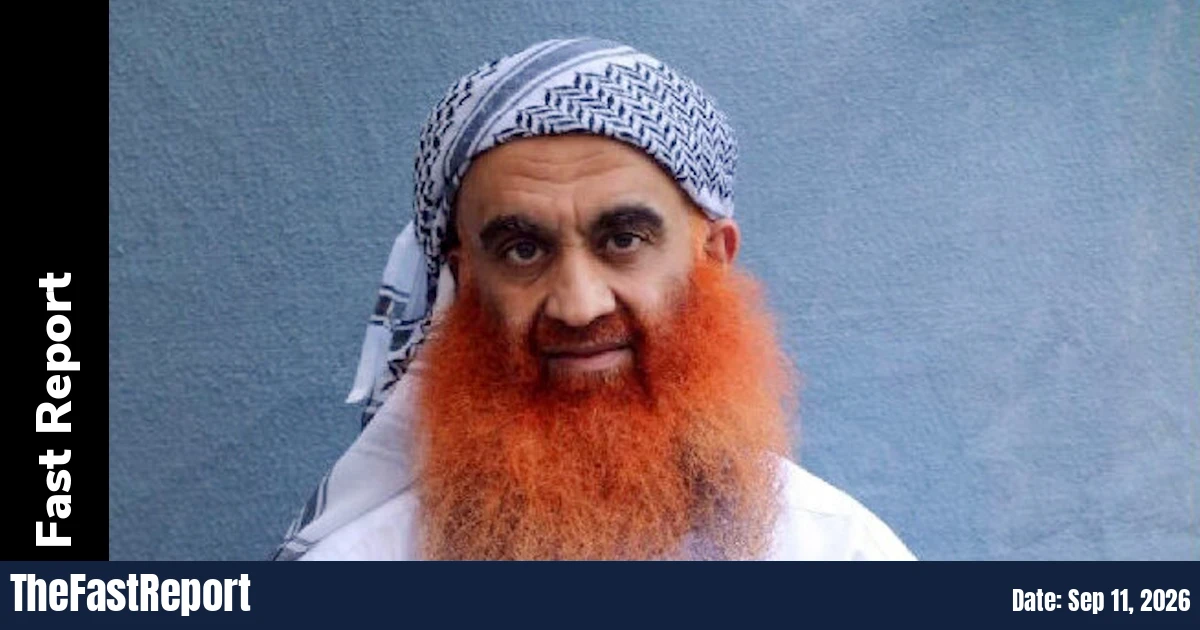
Twenty-five years after the Sept. 11, 2001, attacks that claimed nearly 3,000 lives, the alleged masterminds have yet to face trial. A military judge at Guantánamo Bay has scheduled jury selection for four co-defendants—including Khalid Sheikh Mohammed, the alleged principal architect of the attacks—to begin on June 5, 2028, after rejecting a prosecution request to start in January 2027. Gordon Felt, president of Families of Flight 93 and brother of passenger Edward Felt, expressed deep frustration over the endless pre-trial delays and lack of accountability. The four defendants facing the death penalty on charges including conspiracy, terrorism, and murder in violation of the law of war are Mohammed, Walid bin Attash, Ammar al-Baluchi (also known as Ali Abdul Aziz Ali), and Mustafa al-Hawsawi. A fifth defendant, Ramzi bin al-Shibh, was removed from the case after a military judge found him mentally unfit to stand trial. Mohammed, captured in Pakistan in 2003, spent years in secret CIA custody before being transferred to Guantánamo in 2006. His own statements have formed a cornerstone of the government’s case, but they have also presented a major hurdle due to the torture and coercive interrogation techniques he endured. Michael Lebowitz, a former Justice Department national security attorney and Guantánamo prosecutor, noted that the case grew exceptionally complicated because the Bush administration bypassed traditional federal courts in favor of military commissions for war crimes. The hybrid system, shaped by Congress and the Supreme Court, has seen frequent rotation of judges and personnel. Air Force Lt. Col. Michael Schrama is the fifth judge to oversee the case since the 2012 arraignment, which lasted 13 hours. An effort by the Obama administration in 2009 to move the prosecution to a federal court in Manhattan collapsed following the mixed verdict of Guantánamo detainee Ahmed Khalfan Ghailani in a 1998 embassy bombing trial. Subsequently, Congress restricted the transfer of detainees to the U.S., returning the 9/11 case to Guantánamo. Logistics have continually plagued the proceedings, requiring the entire court system to charter flights from Andrews Air Force Base to Guantánamo Bay for hearings while repeatedly litigating basic issues like detainee access to counsel. Prosecutors have argued for the admissibility of evidence obtained after Mohammed’s CIA detention, while defense teams contend those statements remain tainted by prior coercion. In August, a military judge excluded 2007 statements Mohammed made to the FBI, ruling the government failed to establish they were voluntary. Although prosecutors chose not to appeal to protect the 2028 trial date, Lebowitz expressed confidence that ample documentary and communications evidence remains to secure convictions without the confessions, despite making the evidentiary connections harder. Felt supported the decision to forgo an appeal to prevent further delays, though he remains skeptical the trial will start on time given numerous prior postponements and dozens of pending judicial rulings. For many victims’ families, the prolonged timeline remains painful as elderly relatives hope to live long enough to witness official verdicts. Felt emphasized that for him, justice means presenting the facts in court and supporting the death penalty if guilt is proven, keeping in mind the thousands killed on 9/11, those who died later from illnesses tied to the recovery sites, and military losses incurred over the years.
Source: cbsnews.com