

By Adam Clark Estes
I’ve been playing a small, frustrating game with my three-year-old iPhone: I try to drain the battery as often as possible so its health degrades enough that AppleCare will cover a replacement. A new battery would make the phone feel new enough that I can avoid buying the latest iPhone, which, in my view, isn’t meaningfully better than my old device.
I won’t be able to keep that up forever. In a few years, Apple will likely stop supporting my model, as it has with many older devices, a practice critics call planned obsolescence. At that point, a replacement iPhone will probably cost hundreds of dollars more than my original did, driven in part by a global memory shortage that is making gadgets more expensive and, some argue, worse. Apple raised iPhone prices by $100 this year, and last year’s models saw price hikes as well. As with many consumer goods now, we are paying more to get less.
“It just doesn’t feel that revolutionary anymore,” said Lee Vinsel, a professor at Virginia Tech and co-author of The Innovation Delusion: How Our Obsession With the New Has Disrupted the Work That Matters Most. “When a technology settles down and you’re being asked to pay more for it and it doesn’t feel like you’re getting that much more, it’s frustrating.”
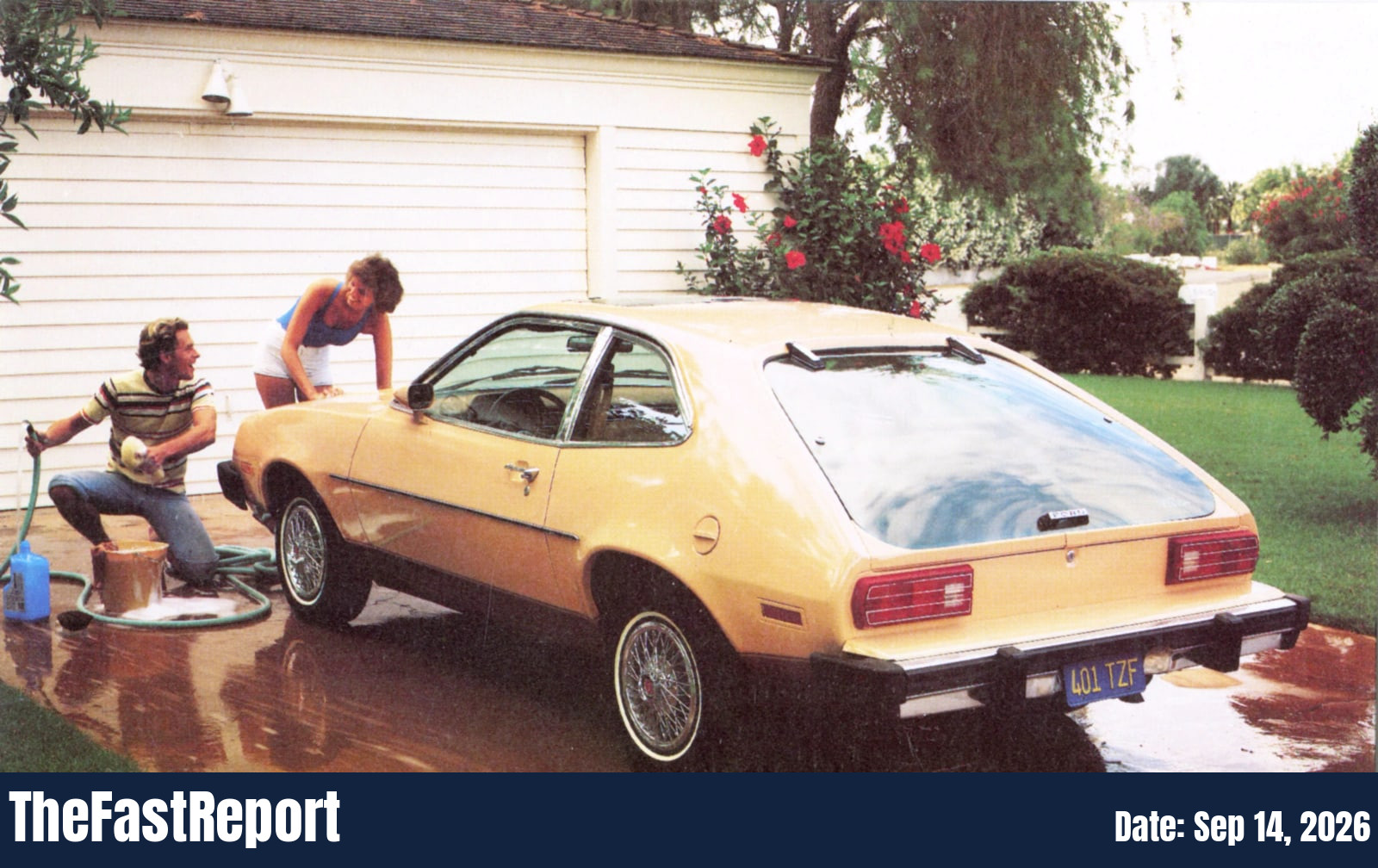
This is not the first time American consumers have faced the erosion of a once-essential, expensive product. In the 1970s the U.S. auto industry went through the Malaise Era. Between roughly 1973 and 1983, rising oil prices plus new safety and emissions rules forced Detroit to abandon its long habit of producing big, inefficient cars. Consumers got models like the Ford Pinto that cost more and performed worse. That decade reshaped how Americans shopped for cars—less Chrysler, more Toyota; fewer muscle cars, more minivans.
Key takeaways
- Today’s smartphone market shares features with the Malaise Era of the American auto industry: prices rose but products didn’t get clearly better.
- The Malaise Era offers a lens for thinking about the enshittification of products and a chance to break free of upgrade cycles and compulsive buying.
- Emissions rules forced automakers to improve technology; right-to-repair laws could similarly push tech firms to be more consumer friendly.
I’m not saying the iPhone is the Pinto—the phone, for one thing, won’t burst into flames on impact. Still, the idea that the iPhone and the wider consumer tech industry are suffering their own malaise has some force. External pressures are pushing companies like Apple away from an implicit bargain with customers that once delivered much better products without much higher prices. Instead, we’re getting mediocre new devices at higher cost.
The situation also evokes the term enshittification. Coined in 2022 by Cory Doctorow, it describes tech platforms that systematically degrade products to extract more profit from users. Doctorow wrote, “Here is how platforms die: first, they are good to their users; then they abuse their users to make things better for their business customers; finally, they abuse those business customers to claw back all the value for themselves. Then, they die.”
The 1970s auto slump helps explain enshittification in two ways. First, it shows that periods when everything gets worse and costs more are not unprecedented—wars, oil shocks, or investment bubbles can trigger them. Second, these episodes create opportunities for consumers to change habits and escape the upgrade cycles companies lock them into.
The global memory crisis isn’t ending any time soon
The rapid build-out of AI data centers has driven computer memory into high demand, and there are basically three companies that make most of it: Micron, SK Hynix, and Samsung Electronics. As early as last August, analysts warned that everything from cars to phones would see price increases, and that is what has happened. Apple has raised gadget prices by as much as 29 percent. Samsung and Google have also increased prices for their devices.
Memory makers had signaled during the pandemic that they needed to build more capacity but then pulled back when consumer demand slowed. Around that same time investors began pouring billions into AI, and data centers suddenly needed massive amounts of memory to run services like ChatGPT and Claude.
The memory manufacturers are posting large profits. Meanwhile, IDC predicts global smartphone shipments will fall nearly 17 percent this year while the total market value will rise by more than 6 percent—because higher prices offset lower volumes.
“Forget the prices most of us were used to paying for any consumer electronics,” Francisco Jeronimo, vice president for data and analytics at IDC, told me. “Even when the crisis gets better, prices will come down, but not to the same price level that we saw a year ago.”
The memory shortage is not resolving quickly. Jeronimo said there is “no light at the end of the tunnel,” although IDC expects the situation might start to improve by early 2028. Tarun Pathak, a research director at Counterpoint, told me this is not a one-year problem but not a decade-long crisis either. Until the shortage eases, expect innovation to slow somewhat and prices to keep climbing.
What the Malaise Era reveals about enshittification
My father was not a car enthusiast, but he liked trading cars. The worst one in our driveway was a 1978 Lincoln Continental, a nearly 5,000-pound land yacht we nicknamed “The Grey Ghost” because it was often dead. Once, on a family vacation, we couldn’t turn it off for two days for fear it wouldn’t restart. Cars like that epitomize the Malaise Era.
Many automotive historians place the start of that period at 1973. That was the year OPEC issued an oil embargo on the United States, producing fuel shortages and steeply higher gas prices. The gas-guzzling muscle cars of the 1960s suddenly looked much less appealing than smaller, more efficient models such as the Volkswagen Beetle.
That era also coincided with big changes to auto design to comply with the 1970 Clean Air Act, which required a 90 percent reduction in new-car emissions over five years. The challenge produced underpowered and less reliable engines. Detroit had built its manufacturing around gas-hungry muscle cars, and Congress enacted the Corporate Average Fuel Economy (CAFE) standards in 1975 to require greater efficiency. (The One Big Beautiful Bill Act of 2025 eliminated the penalties for violating these regulations.)
“There was a whole host of cars that appeared on the scene that were anything but desired by the public,” said John Heitmann, professor emeritus at the University of Dayton. “It’s epitomized by cars like the Chevy Vega, Ford Pinto, of course, which actually I think was a better car than it’s ever given credit for.”
Rising fuel costs, new regulations, and double-digit inflation all pushed car prices up in the 1970s. Automotive design also took an odd turn—huge bumpers, fake wood paneling, and vinyl roofs became common as safety and emissions requirements reshaped styling.
“In a nutshell, that was the Malaise Era and it marked, some would say, the end of the love affair with the car,” Heitmann added.
What is striking is that consumers pushed back on spending more for worse cars—and often came out ahead. German and Japanese automakers, which anticipated the new rules, produced strong models through the 1970s, and American buyers began shifting toward foreign-made vehicles. By the 1980s those companies had secured a strong foothold in the U.S.
In short, a decade of poor-quality American cars turned many loyal Ford customers into Toyota drivers. It’s harder to imagine a mass switch from Apple to Android—ecosystem switching costs are higher today—but waning enthusiasm for annual iPhone upgrades is already reshaping the market. This isn’t only about a $2,000 foldable iPhone.
Our version of progress: Buy refurbished and keep repairing
A major difference between buying a car in the 1970s and buying a phone now is switching cost. To ditch a gas-guzzling Lincoln you could buy or lease a Toyota Camry and drive away. If you’re tired of the iPhone and want to try a Google Pixel, you face the headache of moving data and learning a new OS.
Apple has made leaving its ecosystem difficult, but the annual iPhone upgrade is not inevitable. The secondary market for smartphones is thriving, and refurbished devices can be nearly as good as new. You can buy a refurbished iPhone 15 Pro—the phone I use—for about $550. The price of a new iPhone 18 Pro is more than double that, and the principal differences appear to be a new chip and modest camera upgrades. Apple might argue that AI features in its current iOS require more processing power, but you’d likely need to be a heavy AI user to notice.
At the same time, gadgets are becoming easier to repair thanks to new right-to-repair legislation rolling out across the country. Similar rules in the European Union, which went into effect this year, aim to “create a system that favours repairing a product over purchasing a new one.” Such regulations could reshape how manufacturers design products worldwide. Apple devices are already becoming more repairable ahead of EU battery rules set to take effect next year.
“People treat their cars like precious objects and we worry about them,” said Kyle Wiens, co-founder and CEO of iFixit. “We need to start thinking about electronics as something that we’re going to baby and treat carefully and preserve as long as we can.”
Taking care of your devices and keeping them longer can be satisfying in the way caring for a classic car once was. I have stayed in the Apple ecosystem but haven’t bought a new Apple product in years. Once I get that battery replaced my phone should last a couple more years; my refurbished Apple Watch will get a new battery and a new lease on life, too. If we could make batteries last longer, these devices might last as long as classic cars.
Source: vox.com