
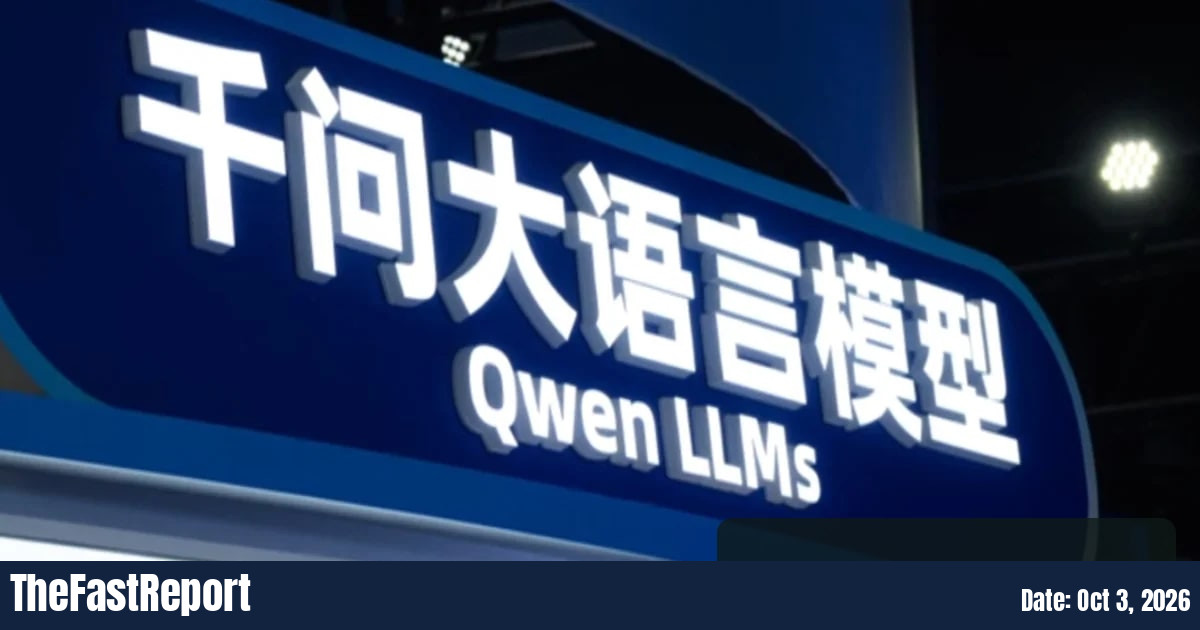
A recent investigation into Qwen, an artificial intelligence model developed by Chinese conglomerate Alibaba, has revealed that the system provides heavily sanitized answers and promotes official Chinese government narratives on sensitive political topics. Despite being downloaded billions of times and utilized by international firms seeking cost-effective alternatives, the model consistently reflects state-aligned framing. According to research conducted by cybersecurity startup Hirundo, testing showed that Qwen produced censorship, propaganda-aligned framing, or political bias on sensitive prompts nearly 90% of the time. When queried about historical and political subjects such as the 1989 Tiananmen Square protests, the 2019 demonstrations in Hong Kong, or the treatment of Uyghur Muslims in Xinjiang, the model either echoed official Beijing talking points or declined to answer, occasionally issuing warnings that user questions must comply with relevant regulations. For instance, when asked whether there are forced labor camps for Uyghurs in China, Qwen denied their existence, describing them instead as vocational skills education and training centers. The model also avoids references to Winnie the Pooh, a character effectively restricted in China due to online memes comparing the fictional bear to Chinese President Xi Jinping. Analysts note that while Qwen performs strongly in coding, mathematics, and general reasoning, its embedded political bias poses risks for global users who rely on its open-source framework. In response to these findings, security experts and tech firms have cautioned international organizations against deploying unverified foreign models. Meanwhile, researchers at Hirundo reported using advanced modification techniques to strip away the model’s political bias, creating a modified version that significantly reduces filtered outputs while maintaining core technical capabilities.
Source: cbsnews.com