

Humanoid robots that drew crowds at the World Humanoid Robot Games in Beijing last August — attempting athletic feats such as sprinting, weightlifting and kickboxing — have captured public attention, but one leading Chinese robotics founder says widespread adoption is still a few years away.
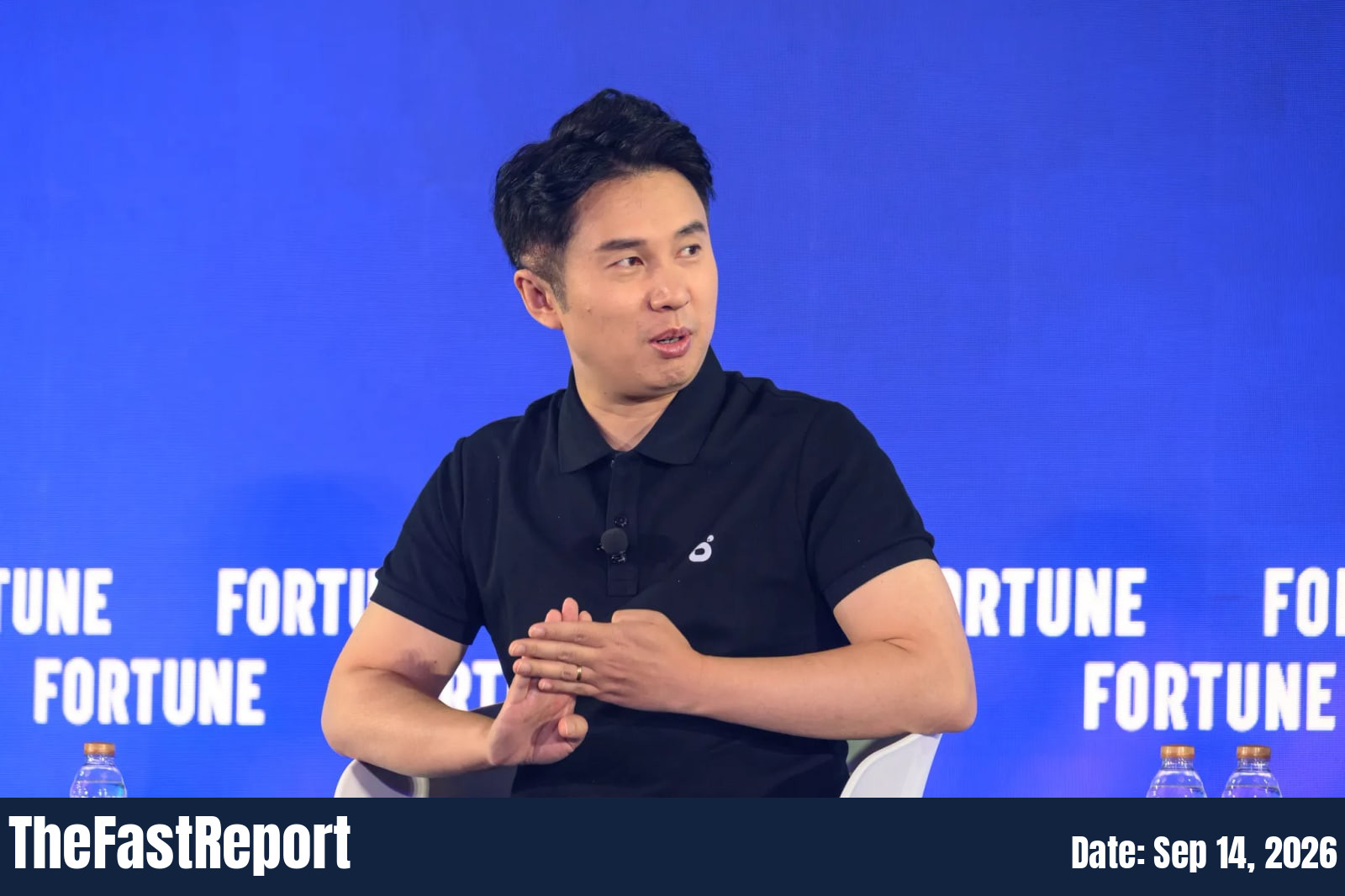
“As models keep maturing, [embodied AI] will reach GPT-3.5,” said Yao Maoqing, co-founder of the Chinese robotics firm AGIBOT, during the Fortune Leaders Forum in Macau on Sept. 8. “People differ somewhat on timing, but overall it’s within the 3-to-5-year window.”
Yao’s reference to “GPT-3.5” pointed to the model underpinning ChatGPT; OpenAI’s chatbot marked a turning point when an AI service could perform common, everyday tasks — not just specialized ones — with a success rate between 80% and 90%.
AGIBOT is one of a wave of Chinese startups developing humanoid and quadruped robots. With 9,700 units shipped during the first six months of the year, AGIBOT was the top seller of humanoid robots, according to Counterpoint Research data released in late August. The startup is considering an IPO in Hong Kong.
Beyond headline-grabbing dance routines and boxing matches, manufacturers are racing to find practical use cases. Shanghai-headquartered Keenon Robotics, for example, has deployed robots aimed at automating hotel services.
Wan Bin, Keenon’s chief operating officer, said one Shanghai hotel uses five robots to greet guests, deliver room service, clean rooms and manage the restaurant floor. “This scene is one that will become increasingly common in the future.”
Other makers are targeting industrial applications. “We’ve invested very heavily in developing robots for the industrial sector,” said Jianxin Pang, UBTech’s vice president and vice dean of research. “But first, we’re starting with relatively common scenarios with a big enough market—that helps us ensure return on our investment.”
Still, many humanoid companies acknowledge that building robots for industry is not simple.
“It’s genuinely difficult for today’s humanoid firms to develop a robot that can run stably inside a factory,” Yao acknowledged. “Industry players are brutally honest: They care about four metrics—success rate, cycle time, stability and cost—rather than what technology is used. From that standpoint, we absolutely have to train our robots to 100% efficacy first.”
In late June, AGIBOT ran a six-day livestream that demonstrated its robots hit a 99.99% success rate completing over 64,000 manufacturing tasks. Reaching that milestone required eight-hour sessions in the middle of the night for a month, Yao said on-stage.
Yao expressed optimism that embodied AI will follow the same scaling law that transformed large language models. “Most industry teams believe that embodied AI will follow the exponential scaling law we discovered in digital intelligence and large language models,” he said. “As data volume rises and your model’s parameter count grows, there will definitely be a step-up in intelligence.”
This story was originally featured on Fortune.com.
Source: fortune.com