
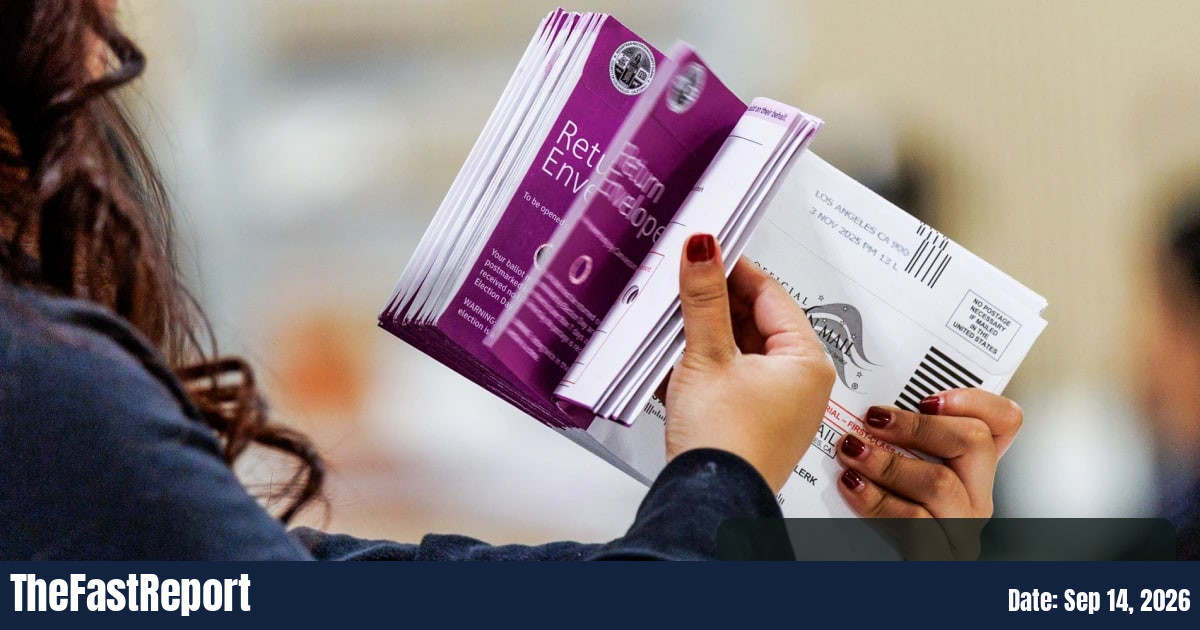
The U.S. Supreme Court on Monday dealt a significant setback to President Donald Trump’s efforts to exercise federal control over elections by refusing to let a controversial U.S. Postal Service mail-in ballot regulation go into effect for the upcoming midterm elections. In a brief order, the high court rejected an emergency application filed by the Trump administration seeking to lift a lower court ruling that found the measure was likely unlawful. The justices appeared divided 7-2, with conservative Justices Clarence Thomas and Samuel Alito dissenting. The regulation would have forced states to submit lists of eligible voters to the Postal Service for verification before ballots could be delivered, while also imposing rigid envelope design mandates. Typically, the Postal Service has no such role in election administration. Challengers, including multiple states led by California and advocacy groups like the League of Women Voters, argued that implementing the policy weeks before the election would cause widespread disruption and disenfranchise millions of voters. Time was already running out for any transition, as North Carolina began sending out ballots on September 4 and other states prepared to follow. Trump frequently criticizes mail-in ballots, claiming without evidence that they cause widespread fraud. The Postal Service regulation stemmed from an executive order Trump issued in March after failing to pass the SAVE America Act through Congress. Massachusetts-based U.S. District Judge Indira Talwani initially blocked the regulation, warning of significant disenfranchisement and noting the administration offered no evidence that the rule was required to combat fraud. In his dissent, Alito stated that the federal government had a strong argument and complained that the courts took too long to resolve the case. Meanwhile, Justice Brett Kavanaugh wrote a concurring opinion explaining that while the Postal Service might have a fair prospect of authority to issue the rule, it had to be blocked because it was introduced too close to election day. While litigation proceeds, states are not obligated to follow the Postal Service regulation, and the agency is barred from refusing to deliver ballots based on the blocked requirements.
Source: nbcnews.com