

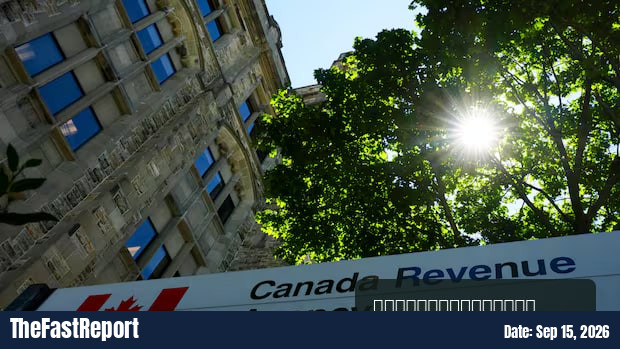
Over six years after the start of the COVID-19 pandemic, the federal government is still trying to track down billions of dollars sent to Canadians who were later found ineligible for benefits. A report from the poverty-focused advocacy group and think-tank Maytree warns that these collection efforts disproportionately impact low-income Canadians who cannot afford to pay, while ultimately costing more money than they recover. The organization has called for an end to government efforts to recover the pandemic relief funds. Ottawa distributed approximately $14 billion in COVID-related benefits to individuals who did not meet the Canada Revenue Agency income guidelines, primarily through the Canada Emergency Response Benefit and the Canada Recovery Benefit. By late November, the CRA reported that $10 billion of that total remained outstanding, with more than $8 billion tied to CERB and CRB payouts. While CBC News requested updated figures, the agency was unable to provide them after two weeks. John Stapleton, a social policy expert and co-author of the Maytree report, emphasized that the situation is not about fraud. Instead, he described it as a consequence of the government moving quickly during a crisis, making mistakes, and then handing the bill to those least able to afford it. Although the group acknowledges that some individuals knowingly applied for ineligible funds, Stapleton noted that many others got caught in the net and are suffering as a result. Budget 2025 allocated $123 million over two years, beginning in 2026-27, to support the collection of these pandemic response benefits. Tyler Meredith, a senior fellow at the Munk School of Public Policy and former head of economic and fiscal policy under Prime Minister Justin Trudeau, noted that many debtors are low-income individuals who spent the money long before repayment was requested. Meredith explained that the initial goal was to deliver rapid assistance, acknowledging that the programs were designed to be roughly 80 to 85 percent ready with the expectation of adjustments over time. Legislation for the CERB was drafted in a matter of days to prevent the Employment Insurance system from being overwhelmed. While the government permits interest-free repayments over time, the Federal Court has confirmed that the CRA must strictly enforce eligibility criteria established by legislation and lacks the discretion to settle debts. Although Employment and Social Development Canada allows payment deferrals or debt write-offs in cases of permanent financial hardship, Meredith considers a total write-off politically unpalatable. Instead, he suggested looking at models like the Canada Emergency Business Account program to spread out repayment terms over a longer duration. Maytree’s report outlines a timeline to wind down collections, recommends parliamentary budget oversight on recovery costs, and urges amendments to the Income Tax Act to give the CRA more flexibility in handling remaining debts.
Source: cbc.ca