
A Gallup poll released in late August found a record 43% of Americans now have a positive image of socialism, the highest share since the question was first asked in 2010. The rise prompts questions about what respondents mean by socialism and whether the label now often refers to social-democratic policies embraced by younger generations.
The meaning of the word has shifted over time. In 1949, the most common definition Americans gave was government ownership of business; by 2018 the dominant association was equality. The pandemic also appears to have influenced attitudes: stimulus checks and widely available COVID-19 vaccines exposed many Americans to expanded government support.
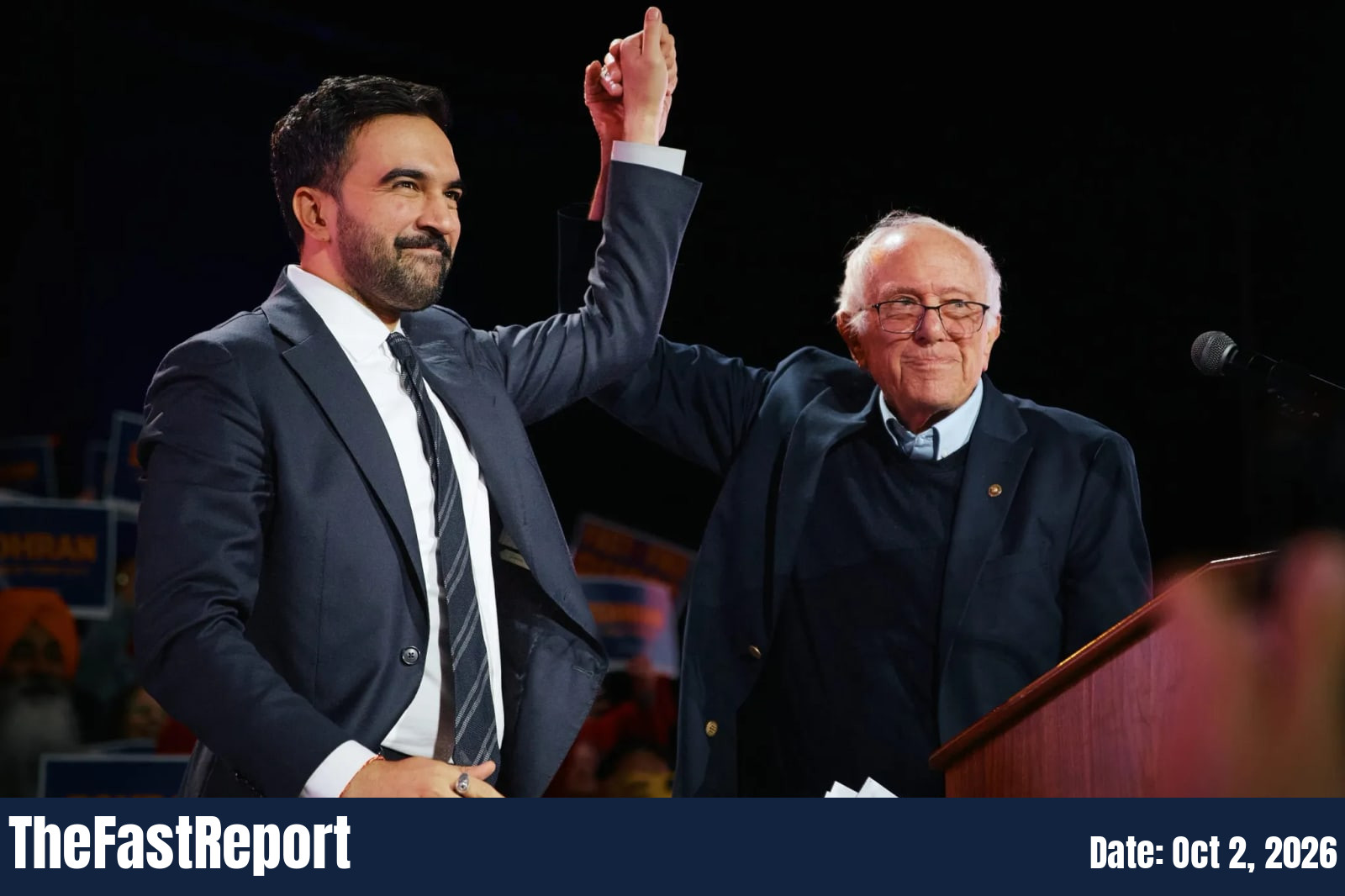
Politicians openly identifying with socialism have gained prominence: Zohran Mamdani, a member of the Democratic Socialists of America, is mayor of New York City, and Abdul El-Sayed, backed by Sen. Bernie Sanders, won Michigan’s Democratic Senate primary in August despite nearly $65 million in outside spending against him.
The White House has pushed back. In a July 4 speech marking the nation’s 250th birthday, Donald J. Trump called the “communist menace” the opposite of “life, liberty and the pursuit of happiness,” calling it “death, tyranny and the pursuit of evil.” Vice President JD Vance has also been outspokenly anti-socialist while cautioning Republicans not to fault young people for socialism’s appeal when housing costs block homeownership.
Overall, socialism still trails capitalism and free enterprise. Gallup found 55% view capitalism positively and 77% view free enterprise positively. What changed most in the latest poll is who favors socialism: Democrats have warmed to it over the past decade, but the recent gain came almost entirely from independents—45% of independents now view socialism positively, up from 37% a year earlier. Meanwhile, big business’s positive rating fell from 49% in 2010 to 35%.
Gallup’s questions measured immediate impressions of words without definitions, and word choice mattered: free enterprise scored 22 points higher than capitalism. When Fortune asked a similar question in 2021, 42% viewed socialism positively.
Nothing to own
Vance has argued that lack of ownership fuels sympathy for socialism. In July he told Joe Rogan that unless young Americans can own something, “socialism is the inevitable outcome.” He later told Fox News, “If we don’t get this right, don’t blame young people for being sympathetic to socialism. We’ve got to blame ourselves.”
Others have made similar warnings. In 2020, Peter Thiel warned that people without a stake in the capitalist system may turn against it. Housing data appear to support that concern: first-time buyers made up 21% of home purchases in the National Association of Realtors’ latest annual survey, the lowest share since tracking began in 1981. Zillow’s CEO has said he doesn’t expect that trend to change soon.
Gallup’s age breakdown shows 18-to-34-year-olds view socialism more positively than capitalism, 57% to 43%. Still, after Mamdani’s primary win last year most young people told Fortune they hadn’t abandoned capitalism. Americans 55 and older favor capitalism by about two to one. By income, households earning $50,000 to $100,000 are split on socialism, and 69% of that group view big business unfavorably—more than any other income bracket.
Trump’s campaign has taken a different tack. The night Gallup released its poll, the White House began airing a taxpayer-funded ad in which Trump says, “Together we will defeat communism, socialism and Marxism in America.” The government-funded spot ran on Fox News in major markets, and by Sunday a third such ad, in which Trump vows to cast out communists and Marxists, aired during NFL games. The Gallup interviews—1,200 adults by phone from Aug. 3 to Aug. 24—ended about a month before the first ad aired, so the ads did not influence those results.
Respondents associated socialism with both economic security and government overreach, and capitalism with innovation and inequality. Support for competition and market choice remains broad, even among groups most favorable toward socialism.
This story was originally featured on Fortune.com.
Source: fortune.com