

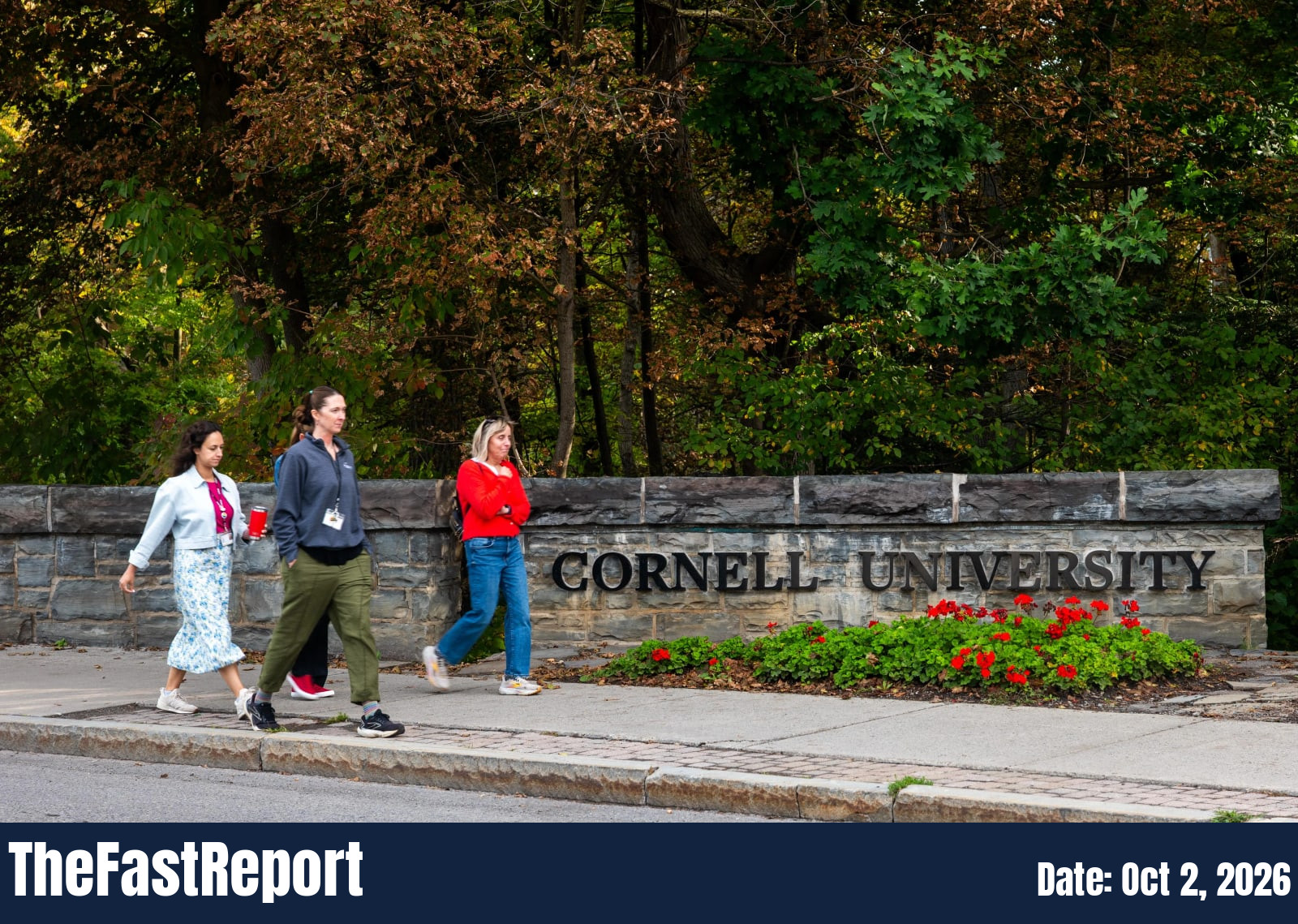

“In what world,” New York Gov. Kathy Hochul asked on Friday, “would the police learn from a victim that she’d been literally gang raped while she was intoxicated by five men in a fraternity house and not elevate those allegations to the district attorney?”
Hochul was referring to a former Cornell student who says she was raped by several members of the university’s Chi Phi fraternity in 2024. At the time, the Tompkins County district attorney filed no criminal charges.
The case has prompted a national debate over how higher education institutions and local prosecutors handle sexual-assault allegations. While the district attorney has defended his handling of the matter, politicians and legal experts are scrutinizing whether aspects of the alleged victim’s account were overlooked. Prosecutors have since reopened the case, and New York state Attorney General Letitia James has been assigned to oversee it, calling it “an active criminal investigation.”
Amy Wang, a Washington Post staff reporter who has covered the story, spoke with Today, Explained co-host Noel King about what allegedly happened, what followed, and what remains unknown. The exchange below is an edited excerpt; the full conversation is available on the Today, Explained podcast.
What is known about the night in October 2024?
The alleged victim is identified in documents as Jane Doe; she was 20 years old and a sophomore at Cornell. Around 11 p.m. on October 19, 2024, she went to a campus bar and later to the Chi Phi fraternity house to hang out with a friend. Jane Doe said she was already very intoxicated—about 10 drinks in roughly three hours. A friend at the fraternity gave her a beer. She alleges that another member pressured her into taking drugs (ketamine and marijuana) and drinking more, and that two members assaulted her. One member then allegedly sent a graphic Snapchat to active Chi Phi members inviting others to join in, and several did.
What happened in the weeks after the party?
Reporting by the New York Times and CBS News indicates Jane Doe, who was in a campus sorority, first spoke with a sorority member while trying to process the night. Initially she did not use the words rape or assault. Rumors about the incident circulated on campus and distressed her. She received a text from one of the seven men apologizing for how things went down; at that point she was not yet accusing them of assault and even tried to reassure him.
On October 22 she made an appointment at the campus health clinic for what she thought was a UTI and told the doctor she had experienced a traumatic event. Over the next weeks her understanding of the event evolved; by November 3, 2024, investigative documents obtained by the Times show she concluded the night at Chi Phi was assault. On November 7 she went to the ER and requested a rape kit, and on November 8 she went to Cornell University Police.
What did Jane Doe tell police?
Jane Doe told police she believed she had been assaulted. She said the encounter began as something she thought was consensual but ended with her stating, “I can say with 100 percent confidence I was raped.” She told officers she was extremely uncomfortable, that she continued taking ketamine in part because she feared blacking out, and that she had viewed at least two of the men as friends. She also reported being hit during the night and described being confronted afterward by rumors that framed her as to blame.
Cornell University Police summarized her account in a six-page statement that she signed and which was submitted to the Tompkins County district attorney.
Why did the district attorney initially decline to press charges?
Tompkins County District Attorney Matthew Van Houten announced in 2024 that, based on the sworn statement Jane Doe signed, his office would not bring criminal charges against the seven men. Van Houten said the statement characterized the encounter as voluntary, conscious, and consensual.
Wang and other reporters note the public has not seen Jane Doe’s sworn statement; the DA released a summary. That summary appears to conflict with investigative documents later reported, including a transcript of Jane Doe’s interview with Cornell police in which she says she believes she was raped and recounts being physically hit. Van Houten has said he did not see, before a subsequent lawsuit, a screenshot of the Snapchat message among frat members nor the police interview transcript.
Were the accused students disciplined by Cornell?
Cornell has said the students faced a range of disciplinary measures, including expulsions and suspensions. Reports that some students were only required to write essays went viral; the university has not denied essays were part of some sanctions but has said students did not receive only that punishment. Cornell cited privacy laws in declining to provide detailed information about individual sanctions.
Have the seven men responded?
The seven men have not spoken publicly. Lawyers for three of them have denied the allegations; one lawyer said his client entered the room but immediately left and did not participate in an assault.
What legal actions are now under way?
There are at least two parallel developments: a reopened criminal investigation overseen by Attorney General Letitia James, now described as active, and a civil lawsuit Jane Doe filed last month against the university, the seven fraternity members, and the fraternity itself. The civil case proceeds independently of the criminal inquiry, and further legal actions could follow as new information emerges.
Source: vox.com