
Predictions that AI will wipe out white-collar work have become commonplace. Microsoft AI CEO Mustafa Suleyman said most professional work could be automated within 18 months. Ford CEO Jim Farley said AI will replace half of all white-collar workers, while Anthropic CEO Dario Amodei spent much of 2025 warning that AI could eliminate half of entry-level white-collar jobs before softening that talking point this spring.
That prospect is especially alarming for some creative workers who have spent years assuring family members there would be jobs in their fields. A Fortune review of Bureau of Labor Statistics data found three creative sectors—film and sound recording, broadcasting and streaming, and newspaper, magazine, and book publishing—lost roughly 189,000 jobs. Film and sound recording alone fell 27%, or about 120,000 jobs, between August 2022 and August 2026. Broadcasting and content providers, including streaming services, lost roughly 29,000, while publishers shed about 40,000 between 2022 and 2025.
This week, Joseph Politano, author of the Apricitas Economics newsletter, said the country lost more than 200,000 jobs in creative industries over the past four years. He called it one of the worst stretches for media employment in modern U.S. history, comparable only to the 2001 and 2008 recessions. Because there’s no broad recession now, he notes the losses coincide with the rise of AI tools that can produce novels, images, and music at low cost and asks whether this is “the fall of the creative class.”
For the man who coined “the creative class,” not so.
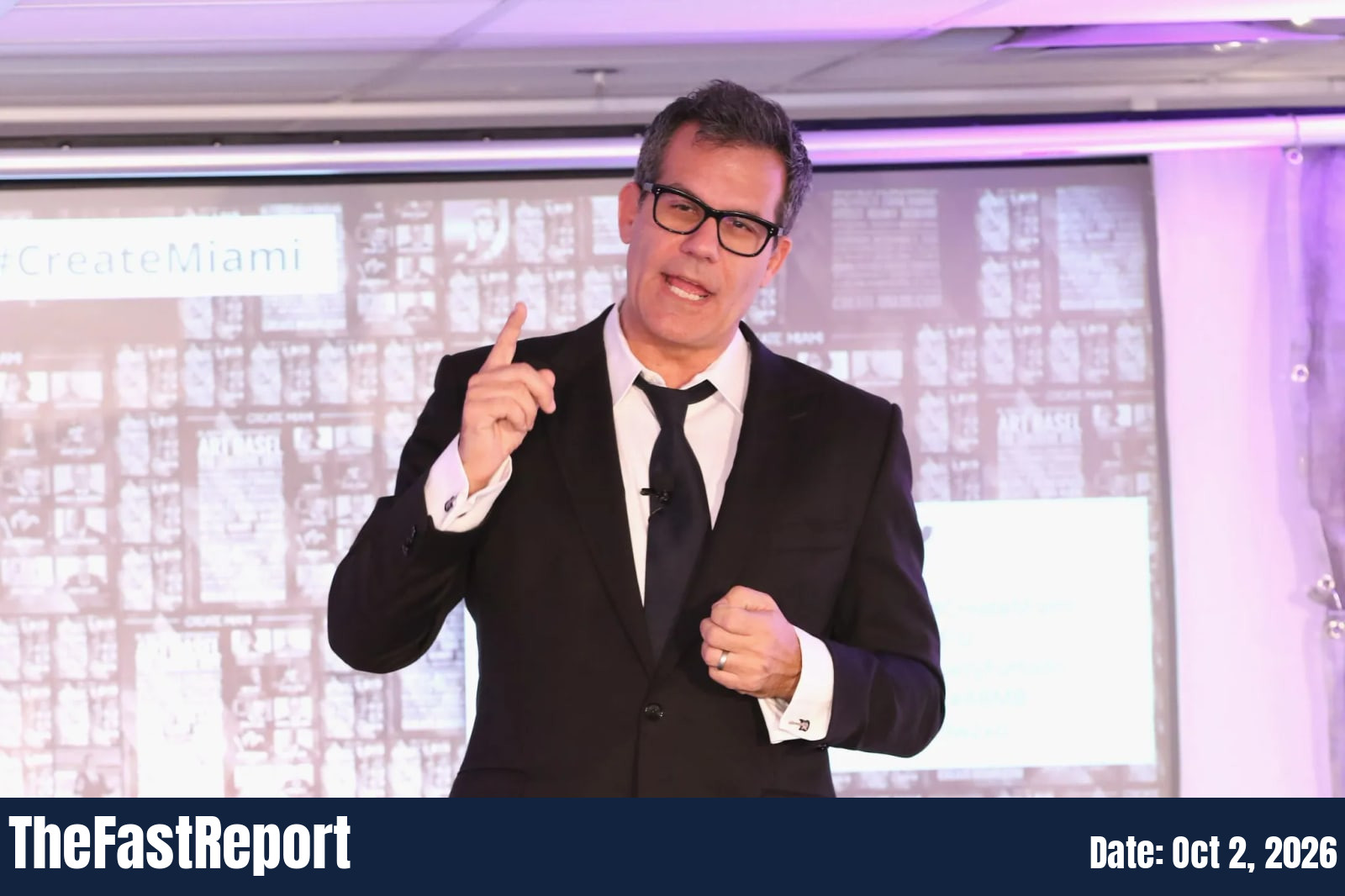
“I’m not sure his numbers are right,” Richard Florida, the urbanist who coined the term in his 2002 book The Rise of the Creative Class, told Fortune. “But I don’t think it’s going to eliminate those jobs. I think it’s going to make certain kinds of creative work more valuable.”
Downtown is for the people
The damage is deepest in film and TV production, where employment peaked at 289,100 in October 2022 and has since fallen by more than a third, according to the BLS. In June, the broader film and sound recording sector declined to 322,300 jobs nationally, its lowest level since 1995 aside from the pandemic. In Los Angeles, shoot days dropped from 36,792 in 2022 to 19,694 in 2025, and about 41,000 film and TV workers left the industry between 2022 and 2024 (the 2023 writers’ and actors’ strikes contributed to that decline).
Despite those losses, employment in performing arts and spectator sports—sectors that depend on people gathering—grew by about 67,000 jobs over the same four years.
Florida says AI actually gives cities an opportunity to focus on what they do best. He divides work into three types: manual work, cognitive work, and what he calls “social skills, people skills, human skills, entrepreneurial skills.” He argues AI automates the first two while increasing the value of the third, and that social skills cluster in large cities.
“That’s why you’re seeing cities like New York and San Francisco become more important, not less,” Florida said. “The AI industry follows the same map: they’re based in San Francisco. Their application occurs in New York.”
Florida points to New York’s mix of neighborhoods as evidence: “Brooklyn and Queens and maybe the Bronx now are some of the few places in the world where the creative class and the service class live together.”
Florida, who joined Vanderbilt University this fall to lead its work on the future of cities, said remote work turned London and New York into “global superstar hubs.” By contrast, Hollywood represents the other side of the equation: Los Angeles is losing one of the world’s great industry clusters as production scatters.
He also revised an earlier view influenced by Jane Jacobs. “I thought that cities could be just Jane Jacobs’ kind of live-work cute neighborhoods,” he said. “I completely minimized the importance of entertainment and spectacle in downtowns.” Downtowns now need sports teams and venues because “people are not going downtown to work; they have to go downtown for fun.”
AI will give cities new life
Growth in live events is not restoring every kind of neighborhood gathering place. The U.S. has lost one-fifth of its movie theaters and nearly one-third of its bowling alleys since 2001. Many neighborhood “third places” are becoming too expensive to operate and visit, while big-ticket venues draw crowds downtown. That pattern is eroding the community Jacobs championed: people are talking to each other less, going out less often, spending more time at home, and in some measures remaining unhappier.
Florida said that is partly due to AI itself. “AI is both an enhancing technology and eliminating technology,” he said. “We don’t know what the net will be, but the net’s better.”
He warned AI will hit parts of the creative class hard, particularly entry-level roles based on brute mental effort: “the grind-out jobs that people work till midnight in a consulting firm or in a financial firm, because AI can do that kind of stuff really efficiently.”
“It changes the role of an accountant or an engineer or an artist. It doesn’t eliminate that job. It makes that job different,” Florida said. The abilities that increase in value are traits of the creative class: “Judgment, taste, originality, imagination, asking the right questions, being able to mobilize people.”
“I don’t think it’ll kill the creative class,” Florida said. “It’ll change the creative class, but in many ways, it’ll also liberate the creative class.”
This story was originally featured on Fortune.com.
Source: fortune.com