
A Republican president who muses about adding Canada to the United States erects trade barriers to punish America’s rivals and to spur domestic manufacturing — yet the policy inflicts serious damage on the U.S. economy.
Frustrated, the country then launches a war of choice. Promises of a swift, decisive victory prove wildly optimistic; the conflict grinds on, and the president’s rosy forecasts of imminent triumph seem disconnected from reality, prompting critics to question his judgment.
The parallels between the War of 1812 and America’s conflict with Iran are striking, and the economic reverberations are as important as the political ones.
The embargo that President Thomas Jefferson imposed on Britain and France before the War of 1812 crushed U.S. exports by roughly 80% and imports by nearly 60% within a year — a self-inflicted blow that plunged the young nation into depression before a single shot was fired at Britain.
Mr. Trump’s tariffs haven’t produced devastation on that scale, but they have still raised core goods prices by an estimated 3.1%, and are projected to shave 0.4% off long-run GDP and cost roughly 345,000 full-time jobs, according to the Tax Foundation.
Then, as now, an American pressure campaign preceded a war that worsened the economic outlook: when fighting with Britain began, a Royal Navy blockade compounded the embargo’s damage in 1813–14, just as the closure of the Strait of Hormuz — which the International Energy Agency calls the largest oil-supply disruption in history — has kept energy markets on edge during the current war.
Most Americans know little about the War of 1812, the nation’s first fought as an independent country. Those who remember the war usually recall when it began, or that it produced the Star-Spangled Banner, or that General Andrew Jackson became a household name on his way to the presidency.
But almost no one can explain why the United States went to war with Great Britain 214 years ago, or what it achieved. The answers are largely: 1) no good reason and 2) basically nothing.
The chief difference between the War of 1812 and the current conflict with Iran — and it’s an important one — is that the War of 1812 was fought on American soil. Thousands died, and the nation suffered humiliation when the British burned the Capitol and the White House. Thankfully, nothing nearly as dire has befallen us in this war — at least not so far.
As the war with Iran plods into its seventh month, with the Trump administration apparently no closer to clear objectives, it may be useful to recall how the United States extricated itself from another ill-considered conflict two centuries ago: by winning battlefield successes and seizing the moment to sign a peace treaty that restored the status quo ante.
In 1803, Napoleon dominated much of Europe and was preparing to invade England. Both Britain and France seized neutral American ships trading with their enemy — and the British impressed American sailors into the Royal Navy.
Many Americans were outraged, but the young nation lacked the power to respond militarily. President Jefferson persuaded Congress to approve an embargo that barred all export shipping from U.S. ports to punish Britain and France.
Jefferson and his fellow Republicans evidently expected the embargo to force a change in British and French behavior; they also believed it would spur American industry. The opposition Federalists warned the embargo would be economically ruinous for Northeastern states and for the country as a whole.
They were right. As a self-inflicted economic blow, the embargo far outpaced Mr. Trump’s tariffs. Farmers struggled to find markets, unemployment soared, and the nation fell into a depression.
Congress rescinded the embargo a few days before James Madison, another Republican, succeeded Jefferson in March 1809. Madison replaced it with the Non-Intercourse Act, which continued to prohibit trade with Britain and France while lifting the embargo on other countries. Months later he allowed American ships to visit British and French ports while barring British and French ships from U.S. harbors. None of these measures altered British or French conduct.
Another force pushing the United States toward war was less about honor than ambition. The so-called War Hawks in Congress — mostly young Southerners and Westerners such as John C. Calhoun and Henry Clay — believed British Canada was vulnerable and urged its seizure. “The conquest of Canada is in your power,” Clay declared to his congressional colleagues in 1810. “I verily believe that the militia of Kentucky are alone competent to place Montreal and Upper Canada at your feet.”
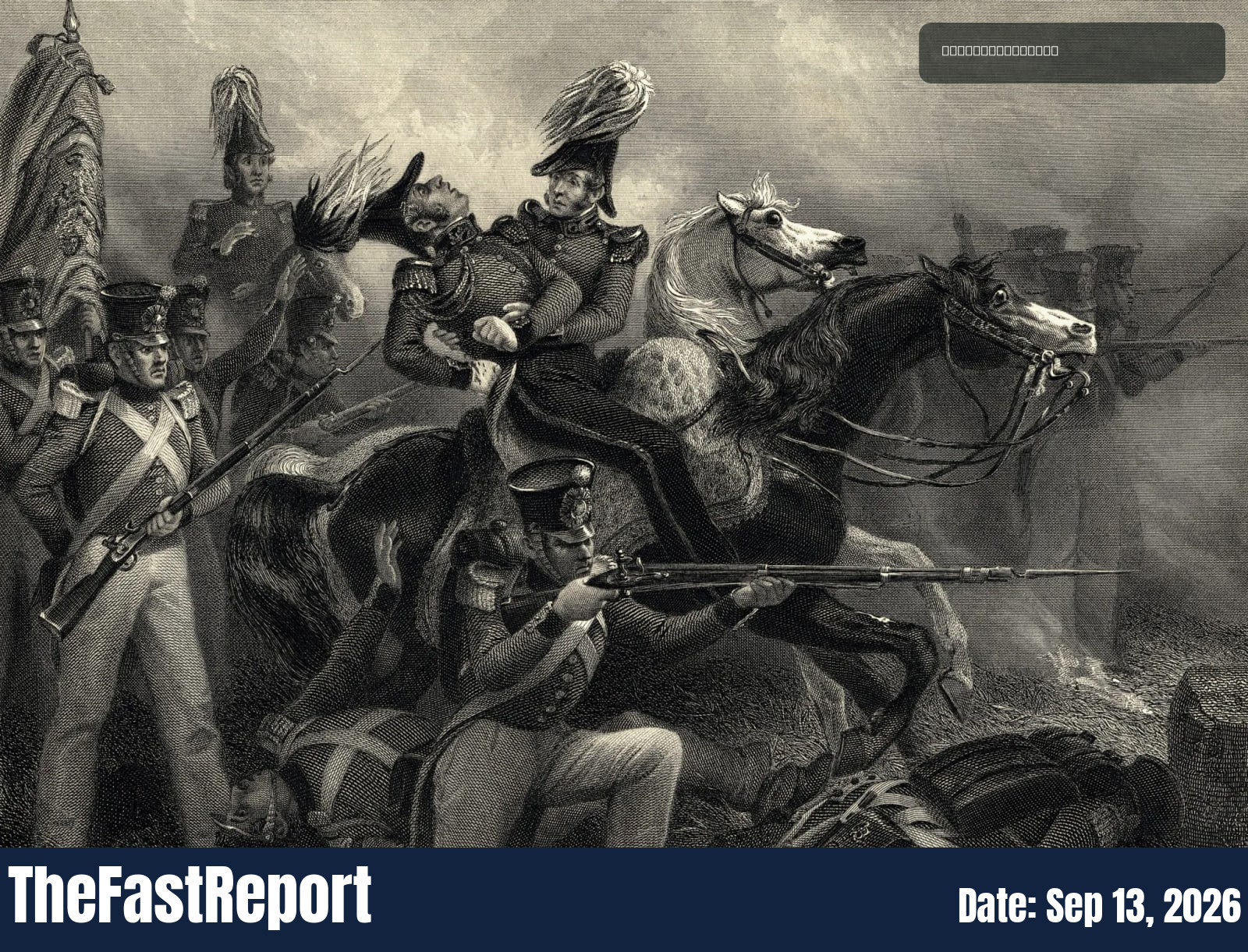
On June 18, 1812, the United States declared war on Great Britain. Things went badly almost immediately.
In mid-July, a force led by Brigadier General William Hull crossed the Detroit River and landed on the Canadian shore without opposition. Elated, Hull issued a jubilant proclamation to local residents.
“Inhabitants of Canada! You will be emancipated from tyranny and oppression,” he declared. “Had I any doubt of eventual success I might ask your assistance, but I do not. I come prepared for any contingency.” Hull’s aide de camp observed that the British and their Indian allies were “deserting by hundreds.”
Hull then marched south to seize Fort Malden on the eastern bank of the Detroit River.
But when he attempted to resupply his troops, warriors led by the Shawnee chief Tecumseh attacked the supply trains and drove them back to Detroit. The Canadian militia and their Indian allies had not deserted after all — they had simply melted into the woods.
Matters worsened. Hull learned that the American garrison at Fort Mackinac, Michigan — which had not realized the country was at war — had surrendered to a combined British and Indian force without firing a shot, leaving Hull exposed to “the whole northern hordes of Indians.” In a panic, Hull ordered the evacuation of Fort Dearborn, on Lake Michigan in what is now Chicago.
The sixty-six soldiers, nine women and eighteen children who left Fort Dearborn were to be escorted to Fort Wayne by a trader named William Wells and thirty Miami warriors. Wells had been captured by the Miami as a child, later married a sister of their chief Little Turtle, then left the tribe and fought with the Americans at the Battle of Fallen Timbers in 1794.
Tecumseh had fought there as well, and he had not forgotten Wells’s perceived betrayal.
Following orders, five hundred Potawatomi and Winnebago warriors attacked the group about a mile outside Fort Dearborn, slaughtering most of them. Wells was singled out for brutal treatment: the warriors reportedly beheaded him and ate his heart.
When Hull received word that British Major General Isaac Brock, governor general of Upper Canada and commander of its armed forces, was approaching with reinforcements, he retreated to Fort Detroit. The British seized the advantage and bombarded the fort with cannon and mortar fire from the Canadian side of the border.
The American commander held out for a day, but after a cannonball struck the officers’ mess and killed four men, Hull sent his son across the river under a flag of truce and surrendered the fort and his entire force to the British.
Two other invasions of Canada at the start of the war also failed. Despite these humiliations, Madison won reelection in November and used much of his second inaugural address to defend the war, calling it “just in its origin and necessary and noble in its objects.”
One critic, fellow founding father Gouverneur Morris of New York, went further. “When I read Mr. Madison’s message I supposed him to be out of his senses, and have since been told that he never goes sober to bed,” Morris wrote to a friend. “Whether intoxicated by opium or wine was not said, but I learned last winter that pains in his teeth had driven him to use the former too freely.”
As the war with Iran has dragged on, Democratic opponents have leveled similar, if less colorful, criticisms at President Trump.
“It was launched without a clear plan, executed without a coherent strategy, and has become a costly, self-inflicted disaster for the American people,” U.S. Sen. Kirsten Gillibrand proclaimed on the Senate floor at the end of July. “Every justification that we were given for this conflict has proven hollow.”
The United States achieved some military successes in 1813, most notably a major naval victory on Lake Erie in September. That win allowed the Americans to retake Detroit, regain control of the Northwest Territory and make another push into Canada.
Still, the broader picture darkened. In October 1813, Napoleon was defeated at the Battle of Leipzig and six months later he abdicated. Freed to focus on the United States, Britain transferred 14,000 veteran troops to the American theater. By the end of 1813, the Royal Navy had blockaded much of the East Coast, inflicting severe economic damage on the U.S.
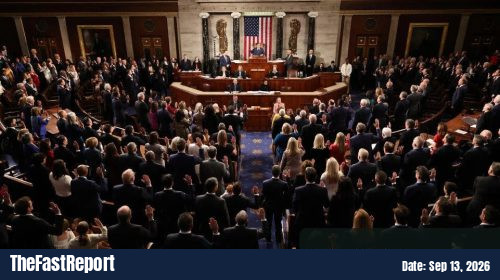
On August 24, 1814, British troops landed at Benedict, Maryland, in the Chesapeake Bay. After routing U.S. forces at Bladensburg, they marched unopposed into the American capital.
In the House of Representatives, the British dismantled doors, paneling and window frames and tore down the visitors’ galleries. Rockets were fired into the roof, which proved to be covered in sheet iron and would not catch fire. The invaders then piled mahogany chairs, desks and tables in the center of the chamber, doused them with rocket powder, and fired into the heap. The inferno cracked stone, melted glass, scorched the fluted columns’ skin, and burned marble to lime.
They had an easier time in the older Senate chamber and within minutes the entire Capitol was ablaze.
Nearly everything inside the White House was combustible; in minutes the flames consumed the mahogany doors and windows, the huge dining room sideboard, the pianoforte, the red velvet cushions in the Oval Room, the yellow damask curtains — even the brassware melted in the heat.
After a torrential rain doused the fires, someone scrawled graffiti on the scorched Capitol walls: “George Washington founded this city after a seven years’ war with England,” the message read. “James Madison lost it after a two years’ war.”
A month after the burning of Washington, American forces repelled the British at Fort McHenry in Baltimore — a victory that inspired Francis Scott Key, who witnessed the battle, to write the Star-Spangled Banner.
But as 1814 became 1815, the situation looked bleak. British forces had occupied eastern Maine and were planning to annex it into Canada. Redcoats were threatening upstate New York, raiding the Atlantic coast with impunity, and advancing toward New Orleans.
The U.S. had gone to war to end impressment of its sailors and to seize Canada — it achieved neither. Yet Madison sought an exit.
Peace talks had already begun in Ghent, Belgium. American negotiators ultimately decided not to press for the war’s stated goals and signed the Treaty of Ghent on December 24, 1814.
The treaty essentially restored the prewar status quo. Still, most Americans preferred to regard the outcome as a victory, and peace ushered in the Era of Good Feelings. For about a decade partisan warfare between Federalists and Republicans subsided as Americans, united by a renewed sense of purpose, focused on national development. That political détente and the Federalists’ gradual decline even briefly fostered the idea that the country had moved beyond rival political parties.
We should be so lucky.
The opinions expressed in Fortune.com commentary pieces are solely the views of their authors and do not necessarily reflect the opinions and beliefs of Fortune.
This story was originally featured on Fortune.com
Source: fortune.com