
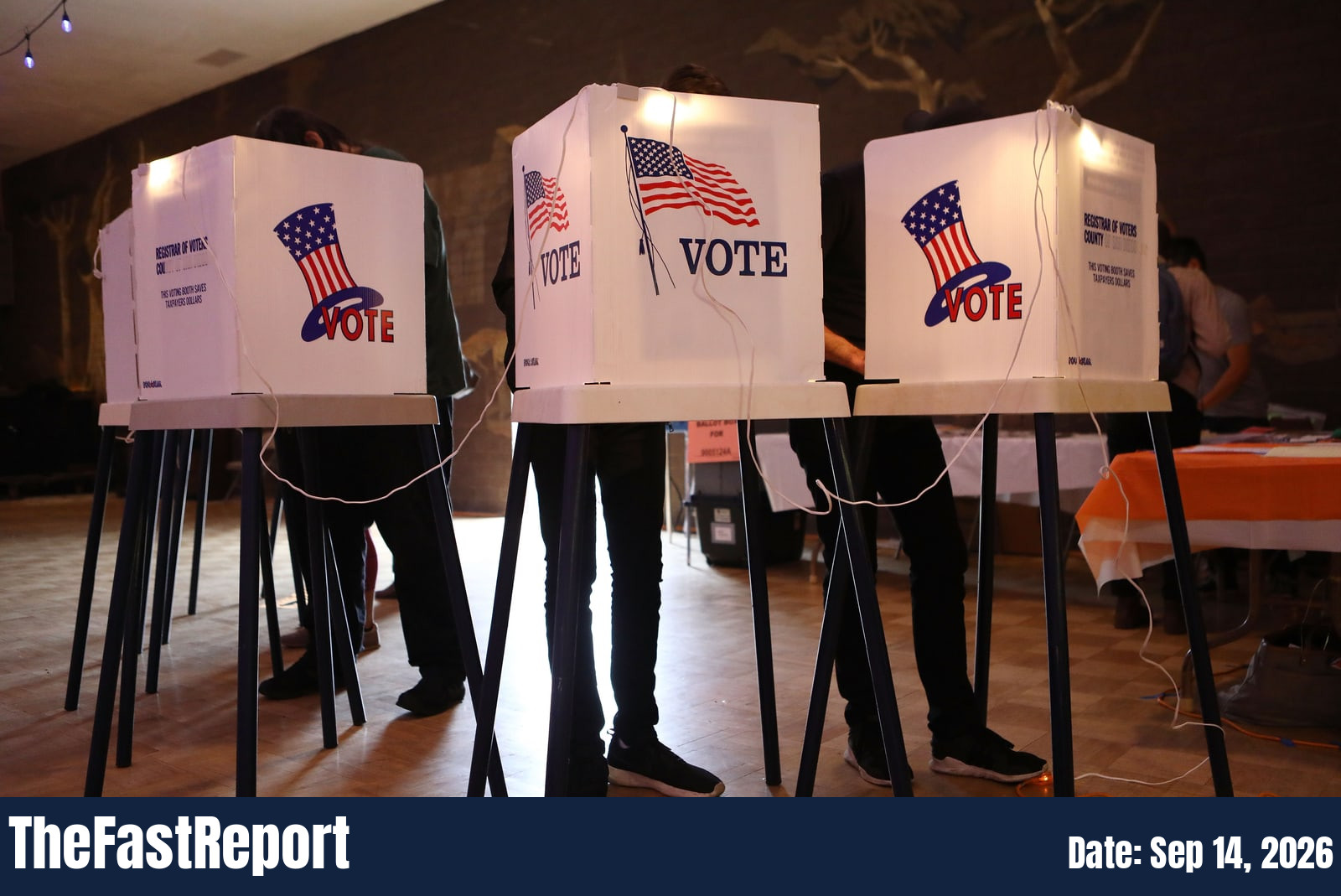

President Donald Trump has spent years making false claims about election fraud and has refused to accept that he lost the 2020 presidential election to Joe Biden. Since 2020, Republicans who denied or questioned the results have taken positions on local election boards, worked inside election offices, trained poll observers, and sought to influence state election laws.
As the 2026 midterm elections approach, candidates who denied or questioned the 2020 results are running for governor and other powerful offices in key swing states. If elected, some could play significant roles in overseeing future elections.
Today, Explained co-host Sean Rameswaram spoke with Andrew Kaczynski, senior reporter at CNN, who has been reporting on election-denying candidates and what their victories could mean for future elections.
Below is an edited excerpt of their conversation for length and clarity.
Which swing states are having elections featuring candidates who have denied the 2020 election results?
Kaczynski said the story focused on five key governor’s races: Arizona, Pennsylvania, Michigan, Wisconsin, and Georgia. These states were won by Donald Trump in 2016, by Joe Biden in 2020, and by Trump again in 2024. In four of those states, he said, there are gubernatorial candidates who outright denied the 2020 results.
How are these candidates in these five races faring? Does it look good for any of them?
Kaczynski cautioned that polling in some of these states has seen big misses, but overall most of the election-denying candidates are behind in the polls. He noted, however, that because Trump won these states in both 2016 and 2024 they remain true battlegrounds where outcomes can change.
And how much is their dispute or lie about the 2020 election coming up in their races?
According to Kaczynski, not a great deal. After the reporters pointed out that at least four of the key candidates had denied the 2020 results, three of those candidates responded with statements saying they would accept and certify whoever won in their states in 2028 and that Biden did win in 2020. That suggests election denial can be a liability.
He gave the example of Michigan’s John James, who had previously said Biden won in 2020 but later reversed course while courting Trump’s endorsement, even claiming at a rally that “Trump won Michigan three times,” a statement Kaczynski noted was untrue. Kaczynski said that while a couple of candidates are distancing themselves from Trump’s claims, at least two—Andy Biggs and John James—did not say Biden won in 2020, did not say they would certify the winner, and did not provide comments to the reporters. Three others said they would certify the winner.
Is this part of a broader effort by the Republican Party or the Trump-aligned movement to embed the Big Lie into institutions, or is it more coincidental?
Kaczynski said he views it more as the latter: that the false claims became deeply embedded in the Republican Party after 2020 because of Trump’s influence. He pointed out that many prominent election-denier candidates Trump backed in 2022 lost, which suggests denial can be a liability, even though Trump continues to support many of these candidates.
What does all this amount to for President Trump—are these moves about the midterms, 2028, or something else?
Kaczynski called it “a pastime” of Trump’s—a recurring pattern where Trump insists he won in 2020 and looks for fraud or problems with mail-in voting. He cited Andy Biggs, running for governor in Arizona, as a major stop-the-steal proponent who said, falsely, that “the governor could have de-certified the results if they wanted to.” He also cited John James’s rally comment that “He won Michigan three times.” Kaczynski added that Trump favors candidates who repeat the claim that he won in 2020, even though widespread fraud sufficient to change the election has never been shown.
Could voter frustration with Trump’s policies overcome the election-related controversies this midterm season?
Kaczynski said yes: if Democrats win by comfortable margins in the House, Senate, and gubernatorial races, the disputes around election denial are less likely to matter. But in very close contests, he warned, election fights could become chaotic: “Election fights, that’s where things could get into a shit show. But I don’t think we’ll be talking about this if [Democrats] win by pretty good sized margins. And obviously Trump can say whatever he says, but the results will be the results — it’s like that.”
Source: vox.com