
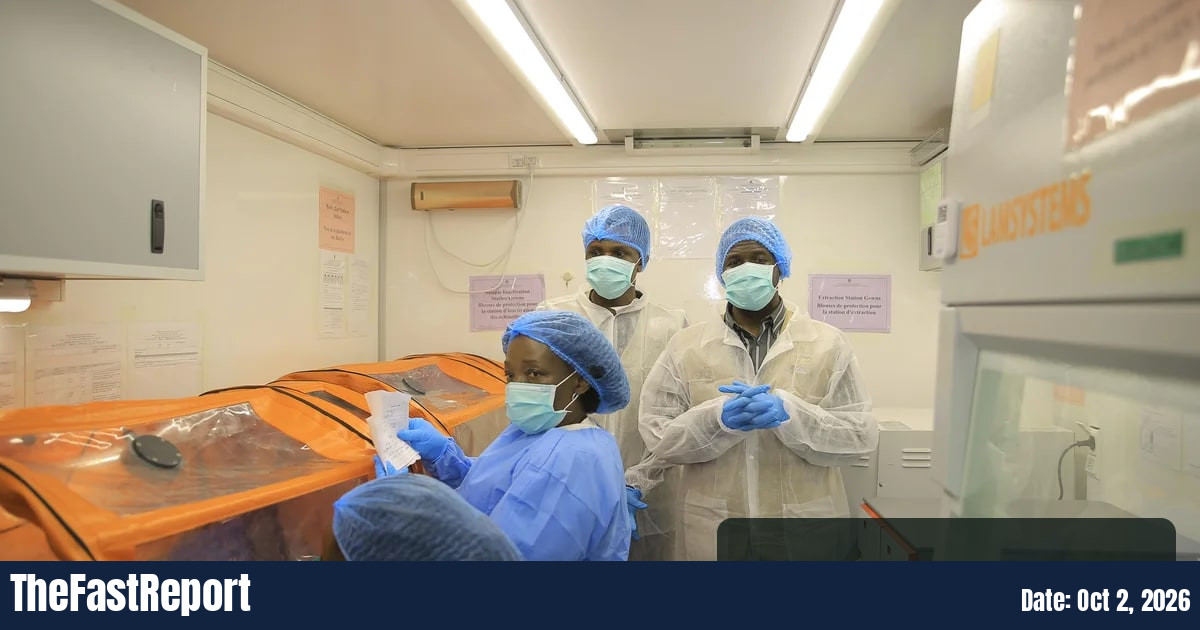
Congo’s relentless Ebola outbreak has surpassed 4,000 deaths as health authorities continue to battle the fastest-growing spread of the virus on record. According to figures released by the health ministry on Thursday, 4,018 people have died out of 8,300 confirmed cases. Meanwhile, over 2,000 patients have successfully recovered from the illness. The outbreak, which was officially declared on May 15, is driven by the rare Bundibugyo virus strain, which currently lacks any known treatment or vaccine. In Bunia, the capital of the northeastern Ituri province near the epicenter of the crisis, health workers briefly gathered to demand payment for months of overdue wages before being dispersed by officials. The protesting personnel included critical surveillance team members responsible for identifying individuals exposed to infected patients. Front-line responders have organized several strikes throughout the epidemic to demand their pay, further complicating containment operations. International aid organizations have also been impacted. Médecins Sans Frontières, or Doctors Without Borders, reported that one of its aid workers contracted Ebola while deployed in Congo. The patient was transported to the Netherlands on a specialized medical flight late Thursday and admitted to a high-level isolation facility at the Leiden University Medical Center. Warning about the severity of the crisis, MSF noted that the human toll is unprecedented for the country. More than 50 health workers have died after catching the virus. The World Health Organization recently sounded the alarm regarding the rapid geographic expansion of the virus into new health zones, which has heavily strained limited supplies and personnel. The Africa Centers for Disease Control and Prevention stated during a recent news conference that while reported confirmed cases appear to be declining, the drop could stem from regional insecurity and community resistance in virus hotspots. Tensions remain high between authorities and local populations. Earlier in the week, Marie-Célestin Karondwa, a local official with the ruling Union for Democracy and Social Progress party, was beaten to death at his home in Butembo after defending government response measures. His residence was subsequently set on fire. Widespread skepticism toward health personnel and public officials has severely hindered mitigation efforts during the nation’s 17th Ebola epidemic. Although authorities introduced a village-focused strategy last month, response teams continue to face pushback from residents who dismiss the disease as a hoax, fueled by chronic corruption and lingering distrust from past outbreaks.
Source: cbsnews.com