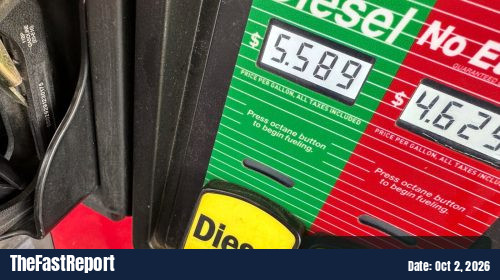

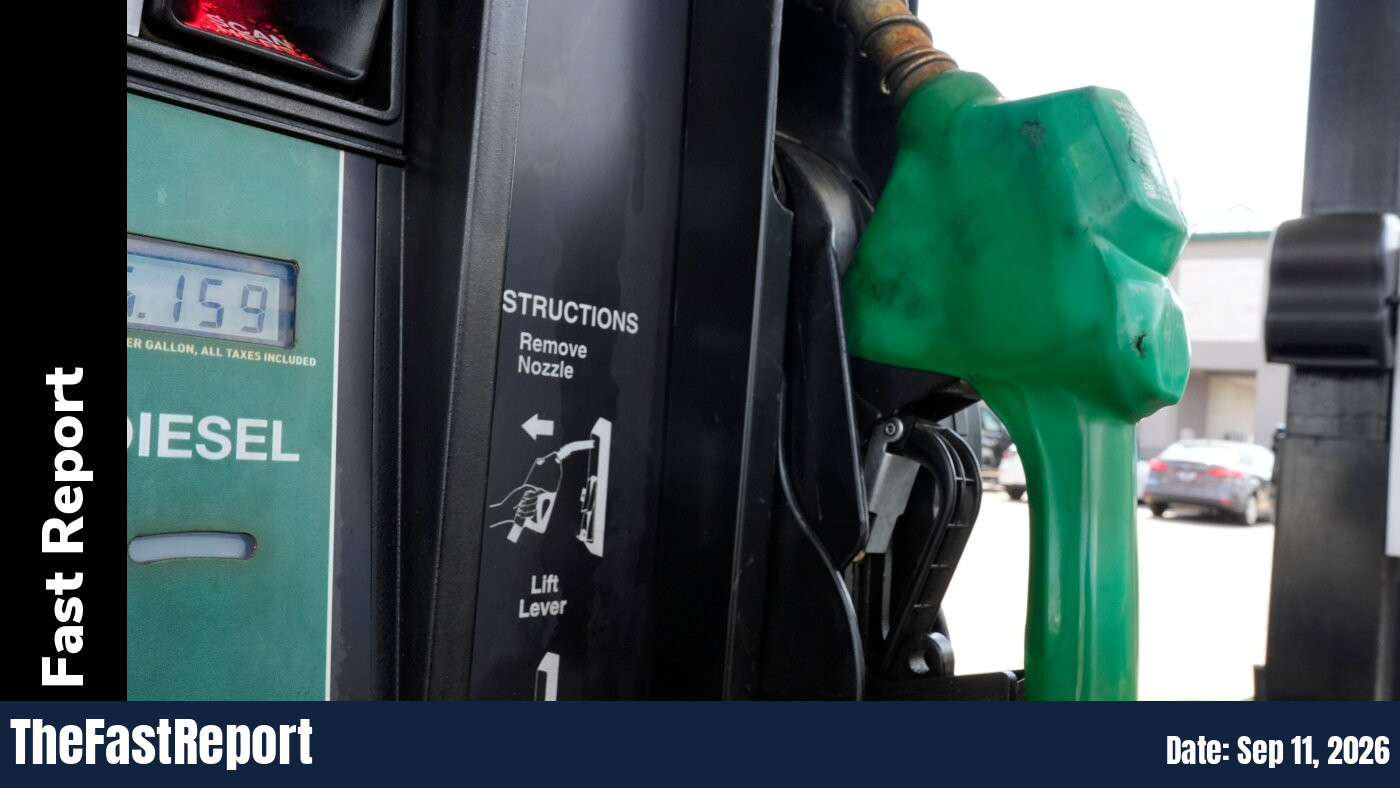
Average U.S. diesel prices surpassed $6 a gallon on Friday, hitting a new record as conflict between Washington and Iran disrupts global fuel supplies. According to AAA, the national average reached $6.05, climbing from $5.85 the previous week and $3.70 at the same time last year. The surge drives up transportation expenses for freight and delivery networks, putting pressure on everyday goods and grocery prices. Both Brent crude and U.S. crude exceeded $100 a barrel as fighting intensified. President Donald Trump indicated that oil prices are unlikely to drop until after the November midterm elections. Diesel costs have steadily escalated since the U.S. and Israel launched military actions against Iran in late February, when the national average hovered around $3.76 per gallon. Disruptions in the Middle East, particularly around the Strait of Hormuz, have heavily impacted crude oil supply chains. Although historical figures adjusted for inflation show higher peaks—such as during the 2008 financial crisis or following Russia’s invasion of Ukraine—current high prices are already generating widespread economic ripple effects. Regular gasoline also rose to an average of $4.29 a gallon. Diesel traditionally stays higher than gasoline due to inflexible demand and its critical role in global commerce, powering everything from farm equipment and fishing boats to delivery trucks and trains. The Independent Grocers Alliance notes that fuel accounts for 15% to 30% of total food costs, creating immediate strains on perishable items like meat and produce. David Ortega, a professor of food economics and policy at Michigan State University, pointed out that supply chain absorptions eventually shift to consumers via fuel surcharges and repriced contracts. Major delivery operators, including Amazon, UPS, FedEx, and the U.S. Postal Service, have already introduced surcharges. The impacts are also felt globally, with nations like Nigeria, Indonesia, and Lebanon experiencing massive spikes in diesel costs since late February, while Hong Kong recorded averages reaching $17.78 a gallon. S&P Global Energy expects security and logistical challenges to persist, forecasting that Middle East crude production may not return to prewar levels by the end of 2027.
Source: npr.org