
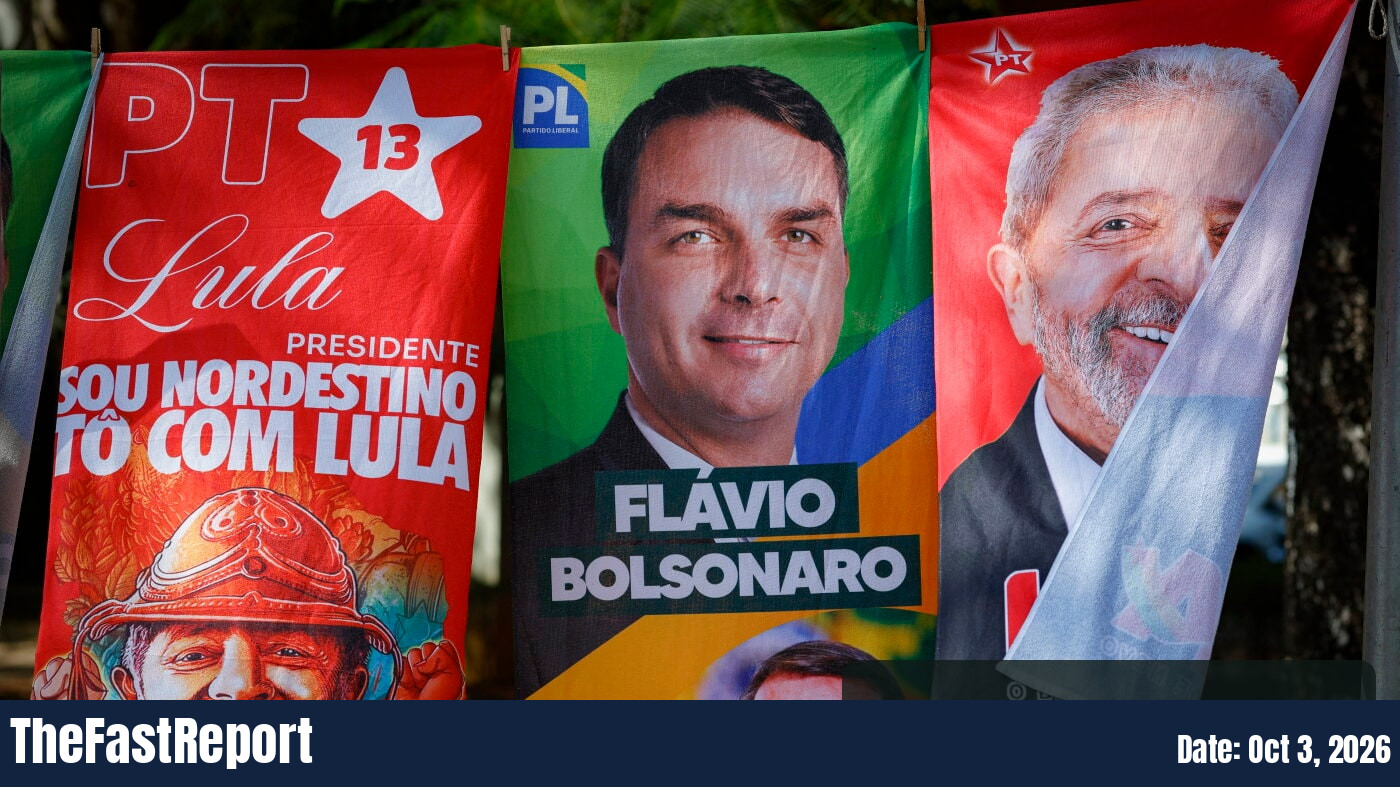
Brazil is holding a crucial presidential election on October 4, 2026, marking a bitter rematch of the 2022 contest. President Luiz Inácio Lula da Silva is running against Flávio Bolsonaro, a 45-year-old senator and the son of former President Jair Bolsonaro. Jair Bolsonaro is currently serving a 27-year prison sentence for plotting a coup to overturn his 2022 defeat, and his son has promised to pardon him if elected. While the younger Bolsonaro describes himself as a moderate, he shares many of his father’s hardline views, including supporting easier access to firearms and casting doubt on human responsibility for climate change. Lula, 80, is seeking a fourth presidential term, positioning his left-leaning administration against the resurgent conservative Bolsonaro movement. Beyond the two families, the election carries immense institutional weight. The incoming president will nominate four of the eleven Supreme Court justices, significantly shaping the judiciary, economy, and environmental policy for years. Polls indicate a tight race among the field of candidates for the presidency, state governorships, and legislative seats. If no candidate secures more than 50 percent of the valid votes on Sunday, a runoff election will take place on October 25. Brazil utilizes electronic voting machines that quickly tabulate results, meaning the outcome of the first round or a potential runoff direction should become clear by Sunday night. Voters are also intensely focused on domestic challenges, notably crime, corruption, and the economy. Lula has emphasized targeting gang financiers and protecting the Amazon rainforest, whereas Bolsonaro advocates for a hardline security approach and severe spending cuts to reduce national debt. The United States has also played a prominent role in the political discourse. Flávio Bolsonaro has campaigned with U.S. flags and pledged closer alignment with the Trump administration, while Lula has pushed back against foreign pressure and defended judicial independence. Analysts note that a narrow victory by either side could provoke challenges from opponents, highlighting the high stakes for Brazil’s democracy, its economy, and its influential position on the global stage.
Source: npr.org