
By Emma Burleigh
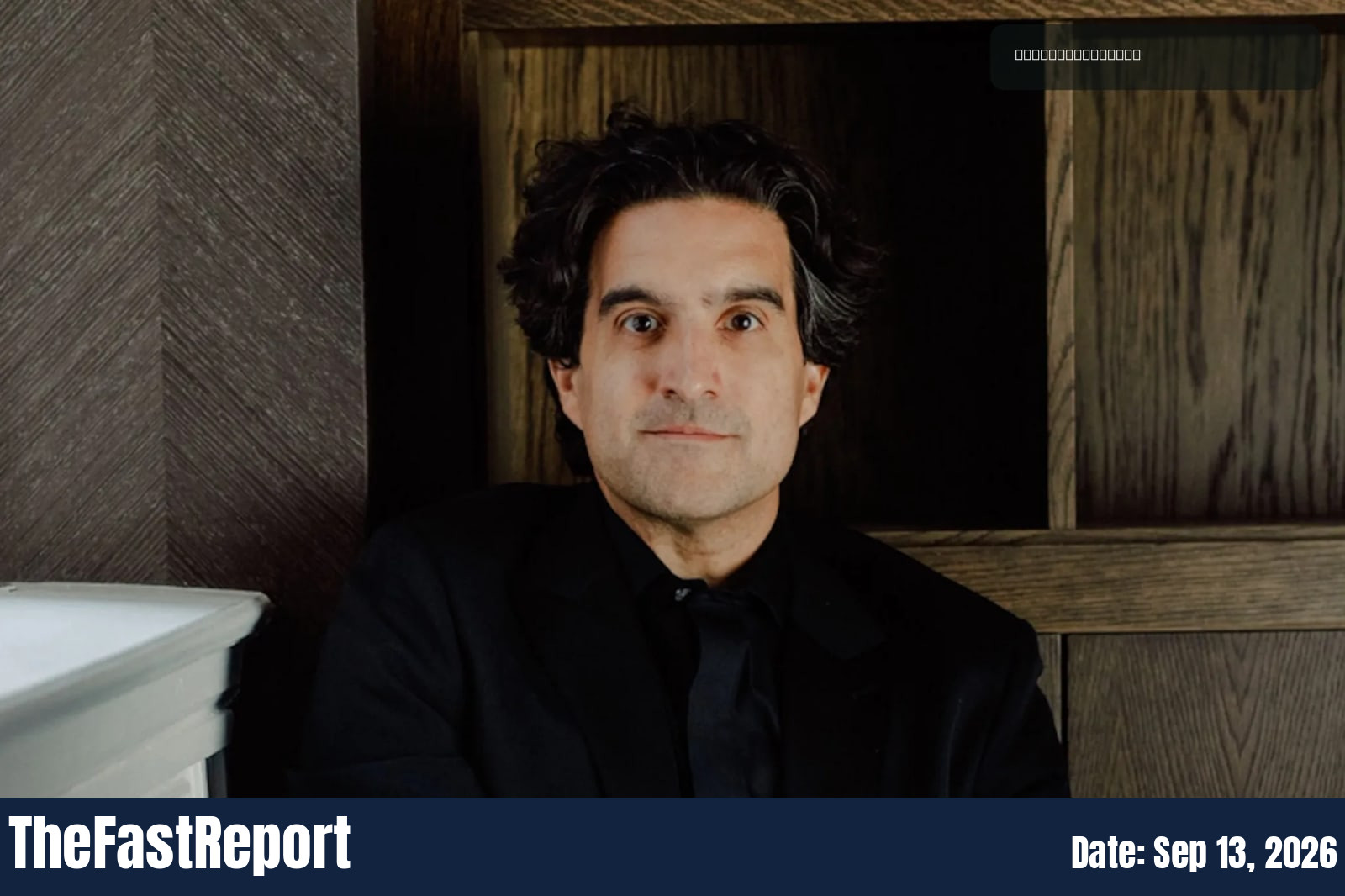
Over a two-decade career as an entrepreneur and investor, Andy Dunn has launched multiple companies and backed dozens more. One of his largest business moves was selling his menswear brand Bonobos to Walmart in 2017 for $310 million. Behind that headline success, however, Dunn had just endured one of the most destabilizing periods of his life.
One year before the sale to Walmart, Dunn confronted a severe mental-health crisis. He’d been diagnosed with Bipolar I in college, a condition marked by extreme shifts in mood and energy—manic episodes and deep depressions. Dunn says there were days when he was nearly catatonic and could barely leave bed, and other times when he was operating on enormous energy and an elevated sense of confidence and possibility.
For years he had been, in his words, “in denial” about the diagnosis, but mounting stress and compounding circumstances opened the floodgates. Dunn’s Bonobos cofounder stepped away from the company, executives cycled in and out, and Dunn was burning through cash while living a flashy New York City life. One March night in 2016, everything boiled over.
Dunn suffered a manic episode in his apartment, during which he believed he was both the president of the United States and Batman. He hit his head on a doorway; his then-girlfriend (and now wife) Manuela rushed in to help stop the bleeding, and in his altered state Dunn struck her. When Manuela’s mother came to assist, Dunn fought with her as well. Eight police officers arrived, restrained him, and Dunn spent a week in a psychiatric ward at Bellevue Hospital in Manhattan. Over the following six months he worked to repair relationships with his girlfriend, family, and business partners.
The episode was a turning point that changed Dunn’s life in both difficult and ultimately constructive ways. Afterward he began medication and therapy and started closely monitoring his sleep and routine. Dunn says Manuela stayed by his side throughout the aftermath, including visiting him in the hospital; the two later married. Bonobos kept him on as CEO until the company was sold to Walmart one year later, and since then Dunn has spoken publicly about Bipolar I in TED talks and in his 2022 book, Burn Rate. The 47-year-old has also used his mental-health journey as inspiration for his current social company, Pie, a social app focused on combating loneliness and fostering real-world connection.
“I went through some pretty calamitous events that led to good news on the other side of that, which was getting healthier, acknowledging the condition, being in treatment,” Dunn tells Fortune. “A new chapter of my life opened up once this was all in the light.”
Building Bonobos—and the overlap between entrepreneurship and mental health
Dunn says many of the traits that helped him build Bonobos—relentless drive, confidence, energy, and a willingness to take risks—mirrored symptoms of his condition.
Dunn was first diagnosed with Bipolar I as a senior at Northwestern University in 1999. He says he was asymptomatic for roughly five years after the diagnosis, and at 28 he cofounded Bonobos with Brian Spaly. The demands and rhythms of entrepreneurship “cloaked” the underlying condition and then, over time, the two amplified each other.
Starting Bonobos was contrarian: selling men’s clothing online in the early days meant founder capital and hustle. Dunn and Spaly invested $60,000 of their own money, selling pants through trunk shows and word-of-mouth. Within a year the business reached a $2 million annual revenue run rate. Growth accelerated: Bonobos received $18.5 million from Accel and Lightspeed in 2010 and by November of that year was surpassing $1 million in monthly sales.
By 2012 Nordstrom had invested $16.4 million and began carrying Bonobos in stores; in the two years after that the company raised another $85 million. That momentum culminated in Walmart’s acquisition of Bonobos in 2017 for $310 million, when the business was generating about $120 million in annual sales. Looking back, Dunn recognizes signs of hypomania—sustained periods of abnormally elevated or irritable mood and energy—during the company’s climb.
“The characteristics of an entrepreneur are really convergent with the diagnostic criteria for what’s called hypomania,” Dunn says. “The flight of ideas, elevated speech patterns, decreased need for sleep, huge amounts of energy for work, bursts of creativity, a feeling that the universe is conspiring on your behalf, delusions of grandeur, risk-seeking behavior…It’s more or less an entrepreneur having a good day.”
It took six months after the 2016 episode and arrest for clinicians to find a medication regimen that felt right. His business and family rallied, the legal case was sealed and expunged, and Dunn has been married to Manuela for nine years. For the past decade he has checked in with a doctor weekly and has not missed a single day of medication. Sleeping six to eight hours nightly has become central to his stability, along with consistent exercise, sunlight exposure, and changing his relationship with work.
Several years later he founded Pie, a social app that connects people and addresses isolation—an effort born in part from his own mental-health experience.
“[Bonobos] was very much wrapped up in my ego and my identity…Whether it succeeded or not was a direct referendum on me as a person,” Dunn says. “And now, with Pie, it’s so important to me that we win, and I have so much belief this is going to be a big and important and enduring company. And I know that it’s a company—it’s not me.”
Founding Pie and turning personal isolation into a new business
Dunn has moved into a very different industry—one focused on human connection rather than chinos and dress shirts.
“I loved building a brand that guys love, where you can wear clothing that makes you more confident,” Dunn explains. “Then towards the end of that journey, I was like, ‘You know what? Like, I think I’m done working on making men’s butts look good in their pants.’”
Initially trying to build a dating app for seniors while helping his mother-in-law find a partner, Dunn pivoted the platform toward platonic relationships after the first idea failed. He wanted a company centered on connection and mental well-being. Pie was founded in 2020, as loneliness grew during pandemic lockdowns, with a mission to foster belonging, community, and friendship.
The app struggled in its first two years, Dunn says, until he moved from New York to Chicago and relocated the company. Struggling to build his own social network in a new city, Dunn found Pie could serve a neglected market. Younger users—particularly Gen Z—began organizing clubs, art markets, and watch parties on the app, running local events, and building recurring groups. That activity helped the platform gain traction beyond its origins.
“I started to notice that Gen Z was getting good at this, running clubs and art markets and watch parties,” Dunn explains. “And I said to myself, ‘If we can build software for those people to empower them, that might be the beginning of a movement to create real meaningful and deeper human connection.’”
Six years into Pie’s development, the app has expanded from Chicago to all 50 U.S. states and more than 100 cities, with the largest user bases in New York City, Los Angeles, Austin, Boston, and San Francisco. The company has raised $24 million from investors including Ev Williams, Forerunner, Renegade Partners, and Origin Ventures. In July of this year, Pie added Nadya Okamoto—founder of NYC run club Zoomies, creator of period-care brand August, and a social influencer with over 4.4 million TikTok followers—as a co-founder. Pie reports it has more than 310,000 users seeking real-world connections.
If you or someone you know is struggling or in crisis, resources are available. Please dial 988 or chat online at 988lifeline.org for free, confidential help. In case of an emergency, call 911 or visit your local emergency room.
This story was originally featured on Fortune.com.
Source: fortune.com