
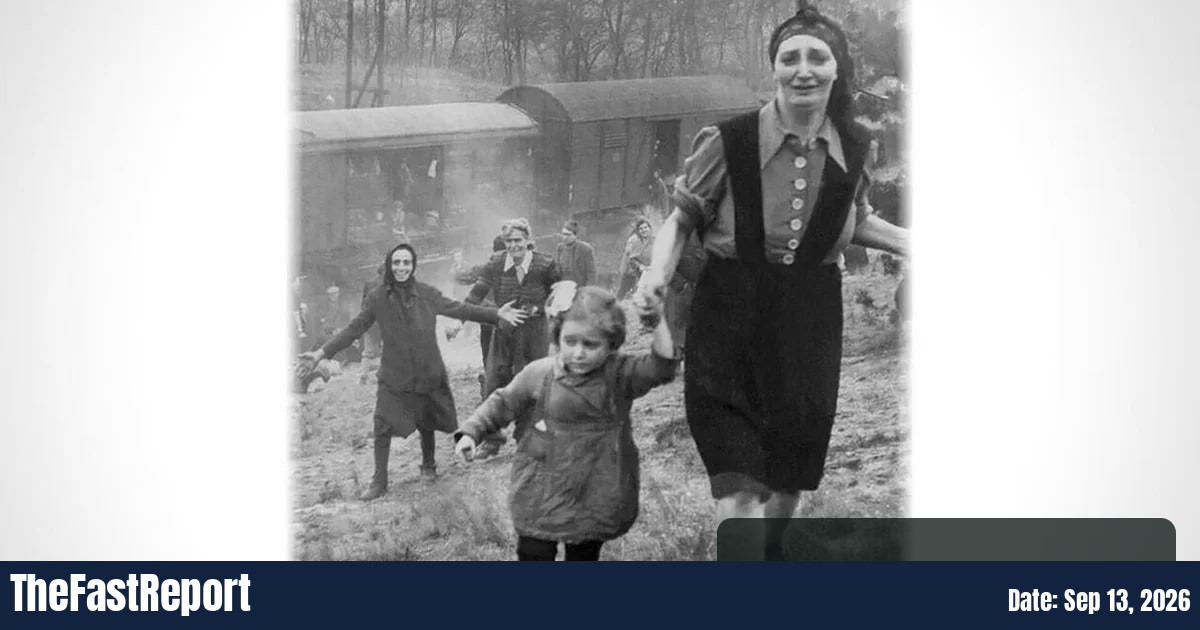
Elizabeth Connolly was just a young girl playing with toy soldiers in her father’s dresser drawer in Upstate New York when she first noticed a mysterious envelope of photographs. Her father, Carrol Walsh, a World War II U.S. Army sergeant, told her the pictures were simply people he had encountered on a train. For decades, the true history behind those images remained hidden, as many veterans chose to keep their wartime experiences to themselves. That changed in 2001 when Matt Rozell, a teacher in Hudson Falls, New York, interviewed Walsh for a student project collecting veteran oral histories. During the interview, Walsh revealed a remarkable account from April 13, 1945, when his unit of advancing American soldiers came across a stopped train near Magdeburg, Germany. The train was crammed with 2,500 Jewish prisoners from Bergen-Belsen who were being transported to another concentration camp in the final weeks of the war. The U.S. troops intervened and provided critical care to the victims, who were on the brink of death. Rozell posted the interview online, leading to connections with dozens of survivors and liberators, and eventually inspiring his book, A Train Near Magdeburg. Among those survivors was Peter Lantos, who was just five years old when he boarded the transport with his mother after his father died of starvation at Belsen. Lantos, now an 86-year-old neuroscientist and author, emphasizes the moral obligation of sharing these testimonies as the generation of eyewitnesses fades. James Bulgin, head of public history at the Imperial War Museum in London, notes that the episode highlights the chaos at the end of the conflict and the fragile quirks of fate that preserved the history of liberation. Filmmaker Mike Edwards, who spent more than a decade producing an upcoming documentary on the event, recently uncovered new visual evidence from that day, including rare photographs that offer fresh historical insight. Rozell reflects that the American soldiers did not have to stop or help the victims, but they chose to do so, leaving a lasting lesson about humanity and the importance of uncovering forgotten history.
Source: cbsnews.com