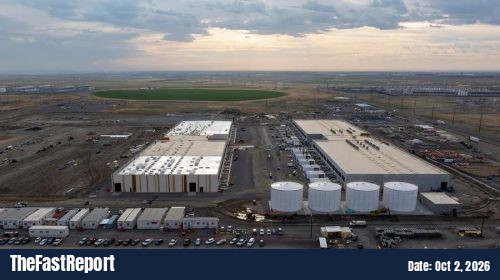

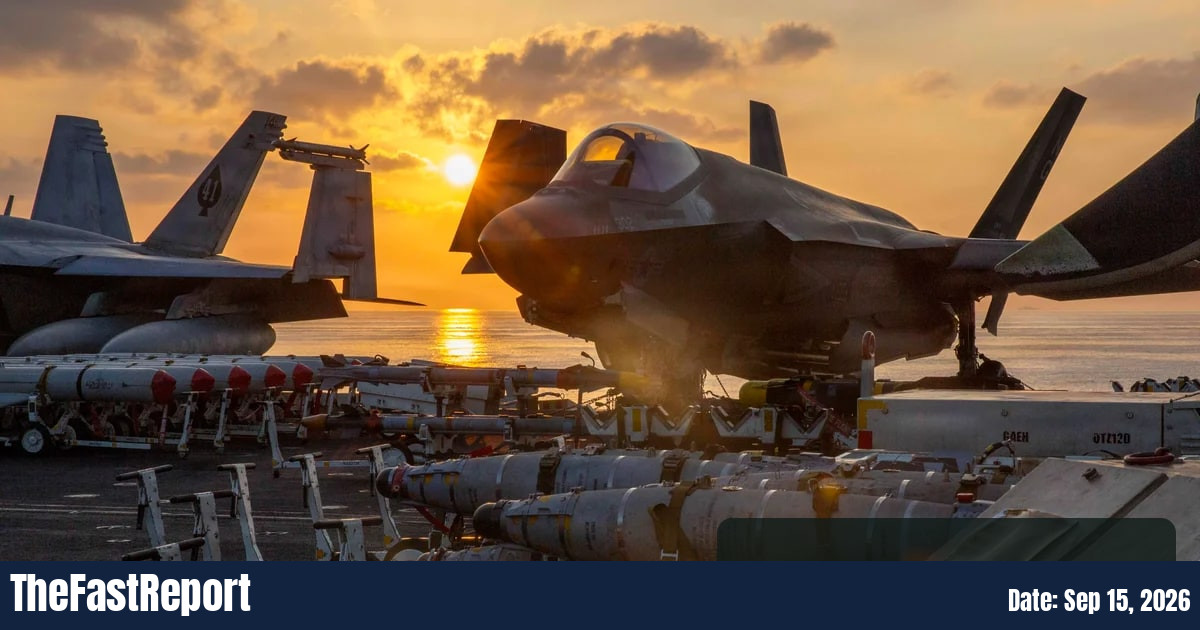
The Defense Department’s inspector general revealed Monday that the United States is facing a shortfall in ammunition as a result of its costly war in Iran. In a first-of-its-kind mandatory report to Congress, the inspector said that between February 28 and June 30, Operation Epic Fury (OEF) had an estimated cost of $33.4 billion, with $22.3 billion of that spent on expended munitions alone. The report noted that the munitions expenditure on OEF has resulted in strategic inventory shortfalls and revealed industrial base bottlenecks for munitions resupply. It also lists losses of American assets, including four F-15s destroyed, one F-35 damaged, seven KC-135 tanker aircraft damaged, and up to 30 MQ-9 Reaper drones destroyed. President Trump has repeatedly brushed off concerns of depleted weapons stores during the six months of war in the Middle East, saying the U.S. has virtually unlimited ammo just a couple weeks ago. On Monday, Mr. Trump posted to his Truth Social platform saying again the U.S. is producing more exquisite and elite weapons than at any time in its history. During the first 24 hours of war against Iran, the United States struck more than 1,000 targets, U.S. Central Command (CENTCOM) has said, and has not returned to such large-scale attacks in recent months. The report notes that Iranian strikes damaged and destroyed hundreds of buildings and structures at U.S. bases in Kuwait, Bahrain, Qatar, UAE, Saudi Arabia, Iraq, Oman, and Jordan during the conflict, but does not include those costs in the cost estimates, saying it is not yet clear if all the bases will be built, or who will foot the bill. CBS Sunday Morning was recently granted access to Lockheed Martin’s production facility in Arkansas to see the production of the latest model of the Patriot air defense missile. The weapon is designed to shoot down incoming ballistic missiles, but each one costs around $4 million, and Lockheed Martin is currently producing 750 of them a year. Asked if the U.S. has enough weapons to see the war through, Mark Cancian, of the Center for Strategic and International Studies, replied that for a war against Iran, the answer is yes, but a war against China would present a great challenge past month one. The Pentagon has denied claims of U.S. munition shortages, but Defense Secretary Pete Hegseth has been urging the defense industry to increase weapon manufacturing, which Lockheed Martin’s Tim Cahill, the head of the company’s missile division, describes as controlled chaos where they move fast, figure it out, find obstacles, and break them down.
Source: cbsnews.com