
By Darlene Superville, Didi Tang and The Associated Press
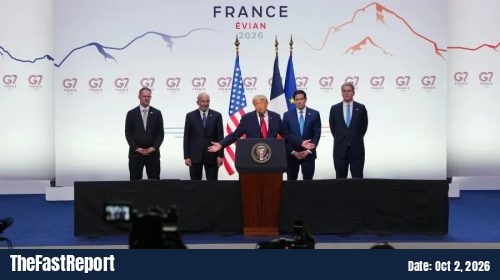
President Donald Trump on Sunday downplayed the need for his administration to slow or tightly check the development of artificial intelligence, saying he is wary of ceding America’s edge to China in a global competition and that political victory would help address risks from the advancing technology.
While he acknowledged the need for some regulation, Trump offered no specifics and attributed warnings about the technology moving too quickly and with little oversight to “negative forces” he did not identify — even as industry pioneers have raised such concerns.
“We can put guardrails, we can do this and that, but I think you have a lot of negative forces that are bringing it up that … shouldn’t be bringing it up, and they’re bringing up things that won’t happen,” Trump told reporters during a weekend trip to Ireland. “But whoever wins with AI wins.”
The president spoke a day after Dario Amodei, CEO of Anthropic, urged the industry to slow fast-moving development to allow safety measures time to catch up — a call echoed publicly by other technology leaders including Elon Musk and OpenAI CEO Sam Altman.
Asked whether the industry should slow down or face regulation, Trump — after watching a golfer tee off at the Irish Open at his Doonbeg resort — said the United States is leading China in AI development and “frankly, I want to keep it that way because whoever wins AI wins.”
Chinese President Xi Jinping is due to visit the U.S. later in September to meet with Trump, and officials expect AI to be among the topics they discuss.
AI has become a major election-year issue in the U.S. as some of the country’s largest companies seed small towns with networks of data centers, while Americans across parties raise alarms about lost farmland and water, and rising electricity bills. Trump continues to support data centers even as many Republican and Democratic officials distance themselves and communities try to block them.
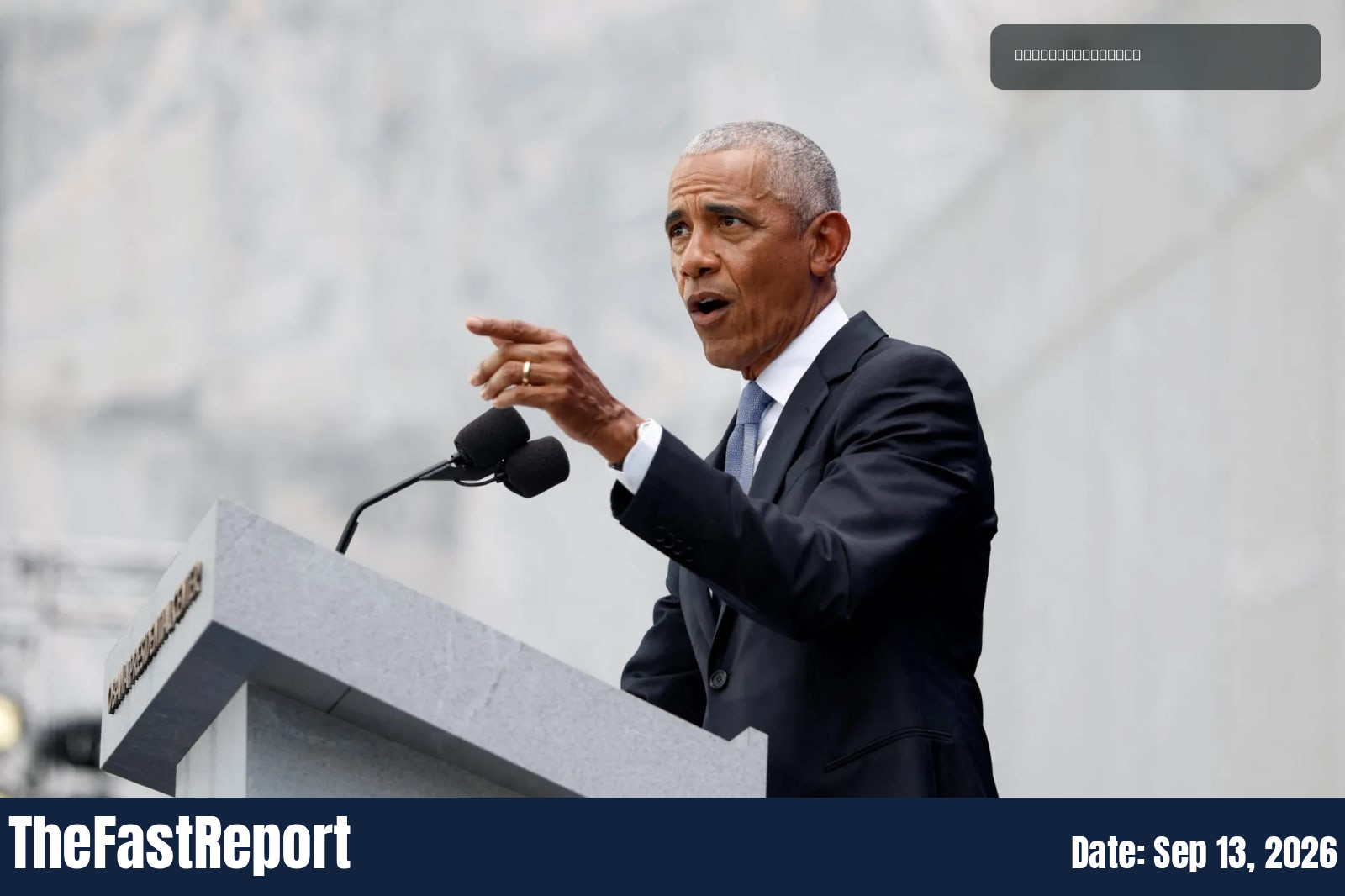
Former President Barack Obama, a Democrat, said his party should make AI a campaign issue.
“I would talk about this, and I would say, ‘Here’s our plan for safety, here’s our plan for making sure our kids are not corrupted by this.’ … I would be thinking about the economic impacts in very concrete ways and understanding what does it mean if there’s going to be job displacement. Where is that going to hit? How are we going to respond?” he said at an event last week with House Democratic Leader Hakeem Jeffries, according to a transcript released by his office.
White House meetings and a call for action by members of Congress
Kevin Hassett, director of the National Economic Council, said he expects meetings this week among administration officials who oversee cyber and science and technology policy to discuss next steps. Trump also could meet with members of Congress who have been sounding alarms about the fast pace of AI development.
“I think the president wants to hear from them as well,” Hassett said.
U.S. House Speaker Mike Johnson acknowledged the need for “some guardrails, some safety measures” so AI “doesn’t run away,” but, like Trump, he emphasized the need to maintain a U.S. lead over China because losing that edge would be a national security threat.
Johnson, R-La., said industry leaders should be summoned for “one big meeting and work this out together in the same room.” He told reporters he has discussed the issue with Trump and called a prompt, broad meeting the “next step.”
“So we’re going to pull everybody together and make sure we do this in the right way,” Johnson said, adding that it is a “top priority for me and for the Congress.”
“But we don’t need everybody to panic right now,” Johnson added.
Jeffries criticized Republican leaders for allowing members to return to their districts for the final part of September.
“We should take decisive action now so that we can slow down, as the CEOs have recently acknowledged, … the pace of development in order to protect the American people and ensure that AI is proceeding safely,” Jeffries said. Action on AI will be a “high priority” when House Democrats meet Tuesday as a group.
Neither Johnson nor Jeffries provided concrete steps for congressional action. Lawmakers broadly agree more guardrails are needed, but past attempts at narrow rules have repeatedly faltered, reflecting congressional reluctance to regulate the technology industry.
Industry insider urges cooperation between Washington and Beijing
Jacob Coxon, a former Anthropic employee who resigned over AI concerns and has publicly expressed his fears, argued for international rules alongside industry self-regulation.
Coxon warned that models could soon gain super capabilities that might exceed human control.
“You’re building a human-level or superhuman-level mind, without understanding what it wants, or thinks, or the way it thinks,” Coxon said.
In the context of fierce global competition for AI dominance, Coxon urged cooperation between the U.S. and China — the two leading nations in the race — to slow development and address safety.
“I do hope that the people in China who are looking at the same problems as we are, so they’re trying to build the same technology, will come to the same conclusion that it has to be done in a measured manner, and it should be easy to cooperate on some sort of mutual — of mutual slowing,” Coxon said. Otherwise, he warned, “we risk running the same race with China, which could be equally dangerous,.”
White House adviser challenges AI leaders over regulation
Tech founder and investor David Sacks, co-chairman of a White House advisory council on science and technology, pushed back on leaders calling for regulation. He argued that those leaders are setting the pace for development and have the power to slow it themselves.
“The easiest way not to build superintelligence is for you to agree not to build it,” Sacks wrote.
This story was originally featured on Fortune.com.
Source: fortune.com